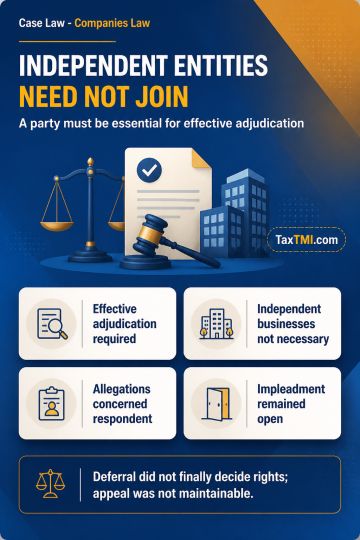
Necessary-party requirements limit impleadment of independent entities, while deferred consideration does not create an appealable adverse determinati...
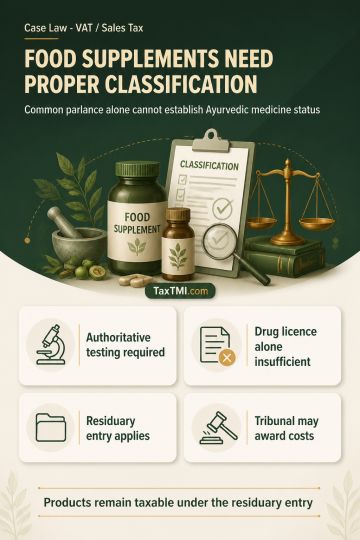
Food supplement classification requires common parlance and authoritative tests, preventing treatment as proprietary Ayurvedic medicines without suppo...
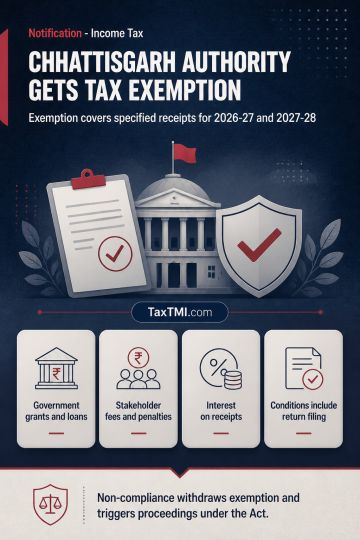
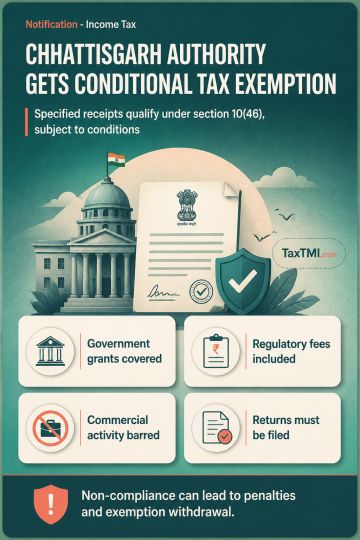
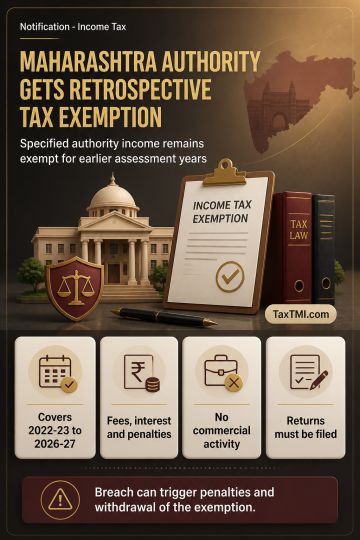
Specified regulatory authority income receives conditional tax exemption, subject to non-commercial activity, unchanged income character, and return f...
Tax exemption for regulatory authority income applies retrospectively, subject to non-commercial activity, unchanged income sources, and return-filing...
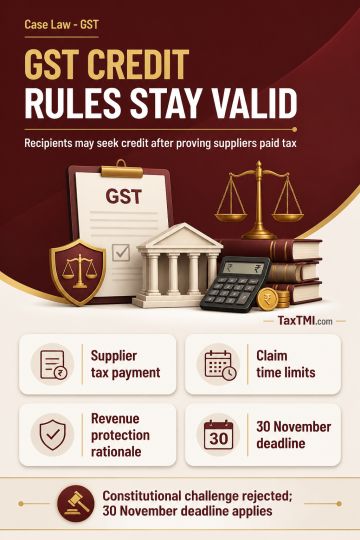
Input tax credit conditions remain constitutionally valid, with eligible recipient claims considered under GST circulars and retrospective filing dead...
Page of 4790
Press 'Enter' after typing page number.
481 to 500 of 95794 Results
❮
❯
❯❯
0 / 200
Expand Note
Add to Folder
No Folders have been created
+
Are you sure you want to delete "My most important" ?
The NCLAT allowed the appeal, set aside the impugned NCLT direction to convene meetings of remaining unsecured creditors and dispensed with the requirement to hold such meetings under Section 230 of the Companies Act. The Tribunal held that the NCLT's mandate to convene meetings despite recorded consents exceeding the 90% by value threshold constituted jurisdictional overreach and was legally unsustainable, particularly where the transferee's net worth materially improves post-scheme and unsecured claims are negligible relative to net worth. Applying Sections 230(6) and 230(9), the NCLAT concluded there is no compromise of unsecured creditors' rights and no necessity to call meetings, and accordingly allowed the appeal.
The NCLAT allowed the appeal, set aside the impugned NCLT direction to convene meetings of remaining unsecured creditors and dispensed with the requirement to hold such meetings under Section 230 of the Companies Act. The Tribunal held that the NCLT's mandate to convene meetings despite recorded consents exceeding the 90% by value threshold constituted jurisdictional overreach and was legally unsustainable, particularly where the transferee's net worth materially improves post-scheme and unsecured claims are negligible relative to net worth. Applying Sections 230(6) and 230(9), the NCLAT concluded there is no compromise of unsecured creditors' rights and no necessity to call meetings, and accordingly allowed the appeal.
Note: It is a system-generated summary and is for quick reference only.
 TaxTMI
 of 4790








 Join Channel


 TaxTMI