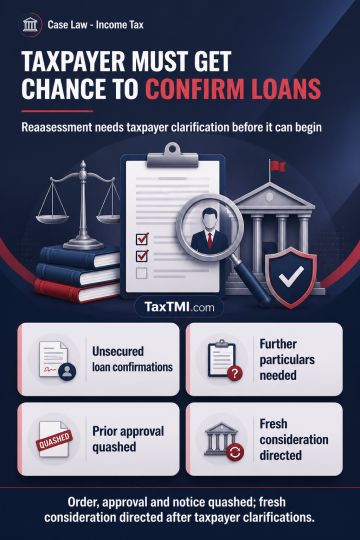
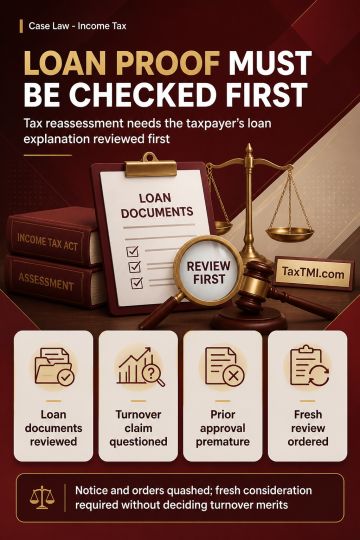
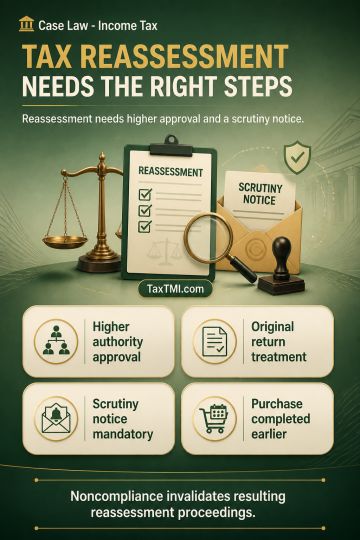
Opportunity to furnish unsecured-loan confirmations is required before reassessment initiation; proceedings require fresh consideration after taxpayer...
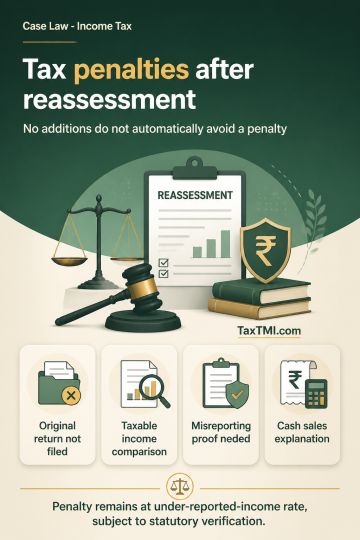
Under-reporting on a first reassessment return attracts penalty, while enhanced misreporting penalty requires proof of a statutory misreporting catego...
The appeal is dismissed for default under Rule 20 of the CESTAT (Procedure) Rules, 1982. The Tribunal found that service by RPAD upon the address furnished in the ST-5 form returned undelivered with an endorsement of "no such person/company," and there is no record of any address update with the Registry. Repeated adjournment requests were declined in light of the appellate court's prohibition of mechanical adjournments and the requirement of cogent substantiation for non-appearance. Having exhausted prescribed methods of service and being unable to ascertain the appellant's whereabouts or intent to prosecute the appeal, the Tribunal exercised its discretion to dismiss the appeal for default and did not restore the matter.
The appeal is dismissed for default under Rule 20 of the CESTAT (Procedure) Rules, 1982. The Tribunal found that service by RPAD upon the address furnished in the ST-5 form returned undelivered with an endorsement of "no such person/company," and there is no record of any address update with the Registry. Repeated adjournment requests were declined in light of the appellate court's prohibition of mechanical adjournments and the requirement of cogent substantiation for non-appearance. Having exhausted prescribed methods of service and being unable to ascertain the appellant's whereabouts or intent to prosecute the appeal, the Tribunal exercised its discretion to dismiss the appeal for default and did not restore the matter.
Note: It is a system-generated summary and is for quick reference only.
 TaxTMI
  TaxTMI
 of 4916