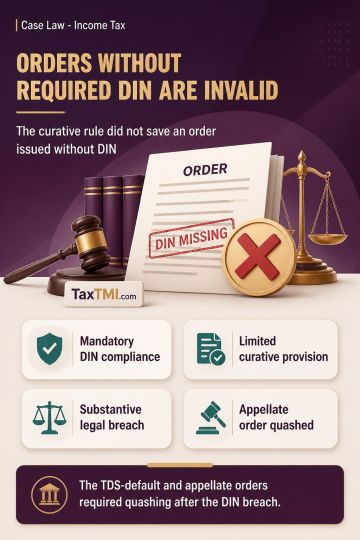
Document Identification Number compliance renders TDS-default orders invalid where mandatory DIN requirements are breached and curative provision does...
CESTAT allowed the appeal and set aside the impugned demand and penalties. The Tribunal held that the duty liability and clandestine removal allegations rested solely on retracted statements, rough private diary entries and other private documents seized during search, none of which constituted admissible or corroborative evidence of manufacture and clearance. The appellant-company's input-output ratio was undisputed and there was no evidence showing receipt of the alleged additional 1,965 MT of raw material. Consequently the confirmed excise demand was unsustainable and annulled; penalty under Rule 25 read with s.11AC and penalties against the individual directors under Rule 26 were also set aside.
CESTAT allowed the appeal and set aside the impugned demand and penalties. The Tribunal held that the duty liability and clandestine removal allegations rested solely on retracted statements, rough private diary entries and other private documents seized during search, none of which constituted admissible or corroborative evidence of manufacture and clearance. The appellant-company's input-output ratio was undisputed and there was no evidence showing receipt of the alleged additional 1,965 MT of raw material. Consequently the confirmed excise demand was unsustainable and annulled; penalty under Rule 25 read with s.11AC and penalties against the individual directors under Rule 26 were also set aside.
Note: It is a system-generated summary and is for quick reference only.
 TaxTMI
  TaxTMI
 of 4918