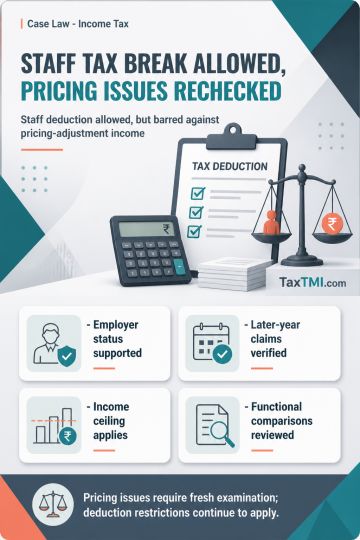
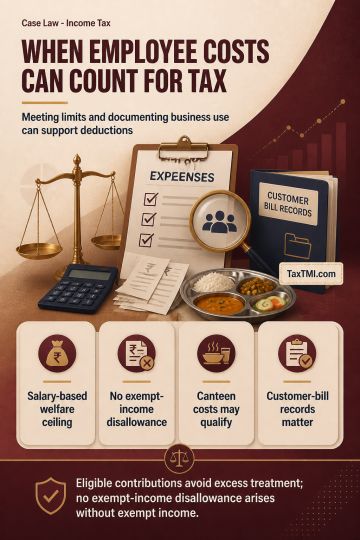
Section 80JJAA employee-cost deduction allowed for deployed staff but barred against transfer-pricing income enhancement, with pricing issues remanded...
Transfer-pricing methodology protects commercially genuine associated-enterprise payments, while pre-2016 secondary adjustments and related notional i...
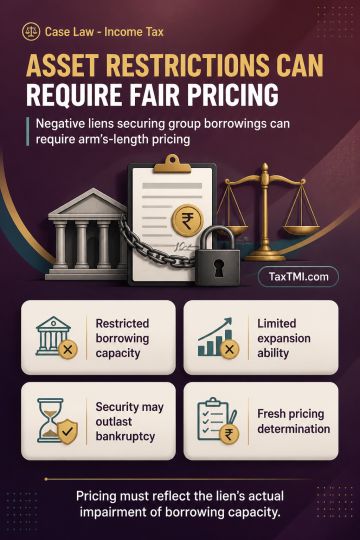
Negative liens over operating assets can constitute international transactions requiring arm's-length pricing reflecting restricted borrowing and expa...
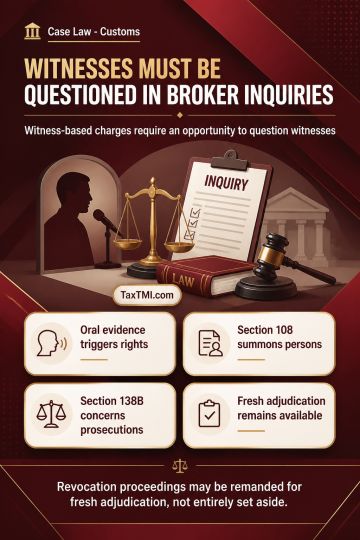
Cross-examination rights in Customs Broker revocation inquiries require witness examination; procedural denial may be cured through fresh adjudication...
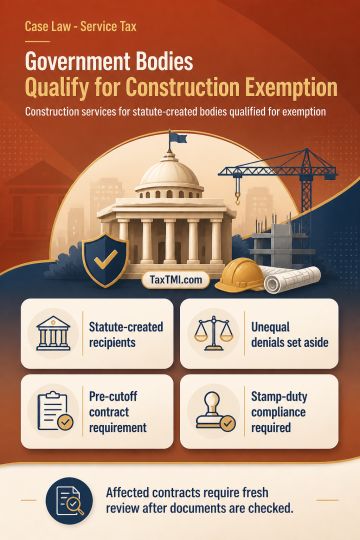
Governmental authority status supports construction-service exemption, while pre-cutoff contract and stamp-duty compliance requires verification on re...
Page of 4826
Press 'Enter' after typing page number.
81 to 100 of 96510 Results
❮
❯
❯❯
0 / 200
Expand Note
Add to Folder
No Folders have been created
+
Are you sure you want to delete "My most important" ?
SC allowed the appeal and, exercising jurisdiction under Art.142, declined to set aside the arbitral award; instead the Court validated the impugned sale deeds to avoid relitigation and third-party prejudice. The Company (Appellant) was penalized by forfeiture of security deposits of Rs.6.82 crores and directed to pay Rs.3.18 crores to the Respondents for completion works, aggregating Rs.10 crores. The Court held that delay in pronouncement alone does not automatically vitiate an award, but an unexplained undue delay that adversely affects tribunal findings can render an award contrary to public policy and patently illegal under s.34(2)(b)(ii)/s.34(2A), permitting interference. Parties anonymized.
SC allowed the appeal and, exercising jurisdiction under Art.142, declined to set aside the arbitral award; instead the Court validated the impugned sale deeds to avoid relitigation and third-party prejudice. The Company (Appellant) was penalized by forfeiture of security deposits of Rs.6.82 crores and directed to pay Rs.3.18 crores to the Respondents for completion works, aggregating Rs.10 crores. The Court held that delay in pronouncement alone does not automatically vitiate an award, but an unexplained undue delay that adversely affects tribunal findings can render an award contrary to public policy and patently illegal under s.34(2)(b)(ii)/s.34(2A), permitting interference. Parties anonymized.
Note: It is a system-generated summary and is for quick reference only.
 TaxTMI
  TaxTMI
 of 4826














 Join Channel


