Revenue neutrality in domestic related-party loans can require deletion of interest transfer pricing adjustments after domestic-transaction verificati...
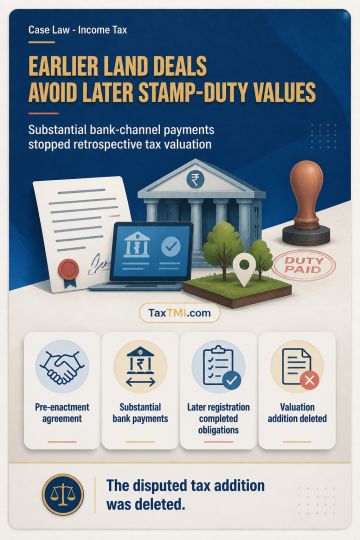
Pre-enactment land-sale agreements escape stamp-duty value substitution where substantial banking-channel consideration was received before Section 43...
Page of 4792
Press 'Enter' after typing page number.
121 to 140 of 95833 Results
❮
❯
❯❯
0 / 200
Expand Note
Add to Folder
No Folders have been created
+
Are you sure you want to delete "My most important" ?
AAR held that the product constitutes a mixed supply under s.8(b) of the CGST Act, 2017 and must be classified by reference to the constituent supply attracting the highest rate of tax; where more than two supplies are combined, the rate and HSN of the component with the highest applicable tax governs classification. In the instant case all constituent items attract the same GST rate (5%); having regard to composition and predominance of chana dal, the AAR concluded the composite pack is taxable at 5% and is classifiable under the HSN corresponding to chana dal as the predominant constituent.
AAR held that the product constitutes a mixed supply under s.8(b) of the CGST Act, 2017 and must be classified by reference to the constituent supply attracting the highest rate of tax; where more than two supplies are combined, the rate and HSN of the component with the highest applicable tax governs classification. In the instant case all constituent items attract the same GST rate (5%); having regard to composition and predominance of chana dal, the AAR concluded the composite pack is taxable at 5% and is classifiable under the HSN corresponding to chana dal as the predominant constituent.
Note: It is a system-generated summary and is for quick reference only.
 TaxTMI
 of 4792








 Join Channel


 TaxTMI