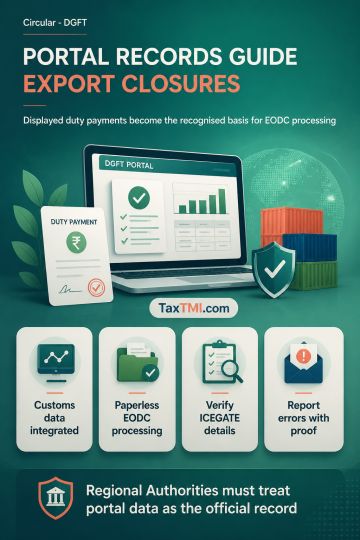
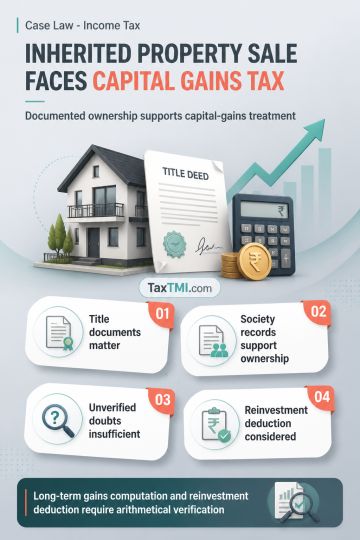
Inherited property sale proceeds require capital-gains treatment where ownership is supported by evidence, not suspicion or unverified signature doubt...
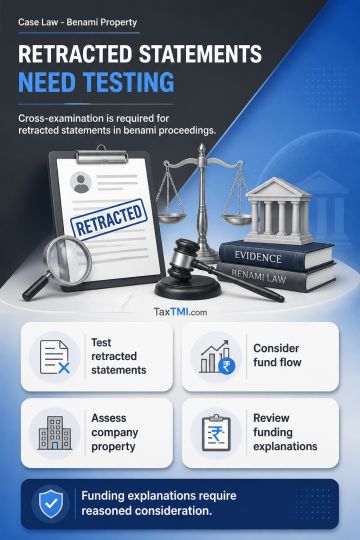
Cross-examination of retracted statements is essential where foundational evidence supports a benami allegation and documented funding explanations re...
Capital-goods exemption covers plant-modernisation accessories, while the import restriction applies only to earlier capital-goods components and spar...
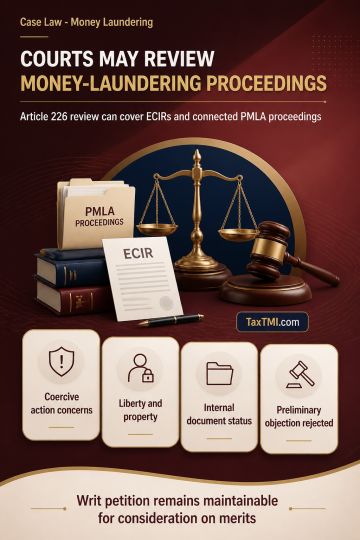
Constitutional judicial review permits challenges to ECIRs and connected money-laundering proceedings where coercive action affects fundamental intere...
ITAT held that amounts received by the assessee pursuant to a final settlement agreement/arbitral award, whereby the assessee relinquished a claim/right to sue, constitute a capital receipt and are not taxable as capital gains. The Tribunal found that the CIT(A) erred in characterising the payment as salary, business income, or short-term capital gain rather than a capital receipt akin to long-term capital nature. Consequently, the order of the CIT(A) was set aside and the additional ground of appeal allowing the capital receipt characterization was allowed, resulting in relief to the assessee from income tax assessment on the settlement proceeds.
ITAT held that amounts received by the assessee pursuant to a final settlement agreement/arbitral award, whereby the assessee relinquished a claim/right to sue, constitute a capital receipt and are not taxable as capital gains. The Tribunal found that the CIT(A) erred in characterising the payment as salary, business income, or short-term capital gain rather than a capital receipt akin to long-term capital nature. Consequently, the order of the CIT(A) was set aside and the additional ground of appeal allowing the capital receipt characterization was allowed, resulting in relief to the assessee from income tax assessment on the settlement proceeds.
Note: It is a system-generated summary and is for quick reference only.
 TaxTMI
 of 4792







 Join Channel


 TaxTMI