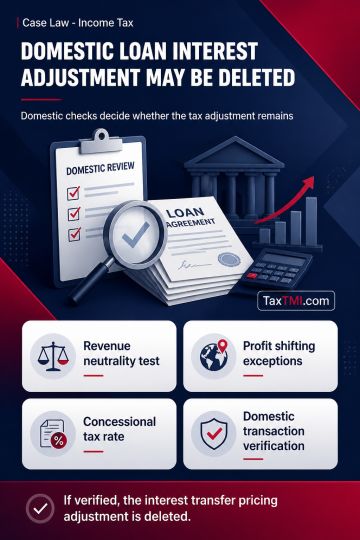
Revenue neutrality in domestic related-party loans can require deletion of interest transfer pricing adjustments after domestic-transaction verificati...
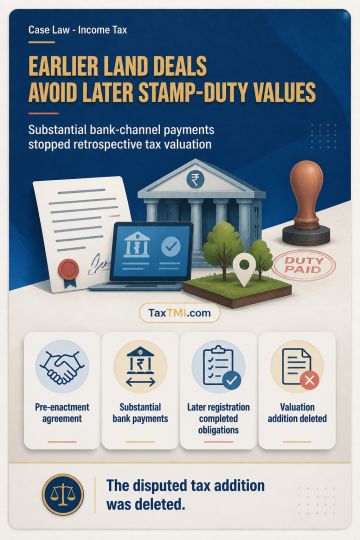
Pre-enactment land-sale agreements escape stamp-duty value substitution where substantial banking-channel consideration was received before Section 43...
Page of 4792
Press 'Enter' after typing page number.
121 to 140 of 95833 Results
❮
❯
❯❯
0 / 200
Expand Note
Add to Folder
No Folders have been created
+
Are you sure you want to delete "My most important" ?
ITAT held that where the payee has declared the receipts and discharged tax liability, the payer cannot be treated as an assessee in default under s.201/201(1A); the AO must first ascertain default before invoking disallowance. Applying this principle, the Tribunal found the taxpayer's contract involved a 4% supervision margin payable to the contractor for construction of an institutional facility and, given the charitable context and non-commencement of the project, afforded the assessee the benefit of doubt. The AO was directed to treat only the 4% margin as fees chargeable under s.194J. Other administrative and allied payments were sustained. Grounds were accordingly partly allowed.
ITAT held that where the payee has declared the receipts and discharged tax liability, the payer cannot be treated as an assessee in default under s.201/201(1A); the AO must first ascertain default before invoking disallowance. Applying this principle, the Tribunal found the taxpayer's contract involved a 4% supervision margin payable to the contractor for construction of an institutional facility and, given the charitable context and non-commencement of the project, afforded the assessee the benefit of doubt. The AO was directed to treat only the 4% margin as fees chargeable under s.194J. Other administrative and allied payments were sustained. Grounds were accordingly partly allowed.
Note: It is a system-generated summary and is for quick reference only.
 TaxTMI
 of 4792









 Join Channel


 TaxTMI