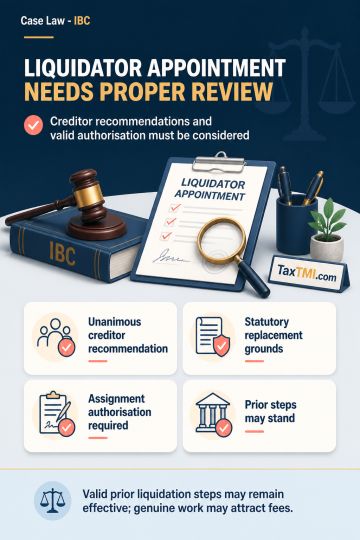
Liquidator appointment under Section 34 requires consideration of creditor recommendations, valid professional authorisation, and preservation of vali...
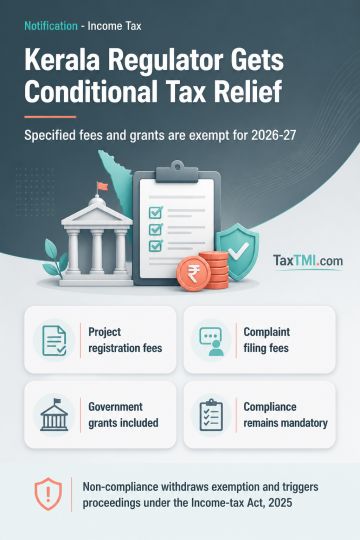
Income-tax exemption for specified regulatory fees and government grants applies subject to non-commercial activity and continuing compliance conditio...
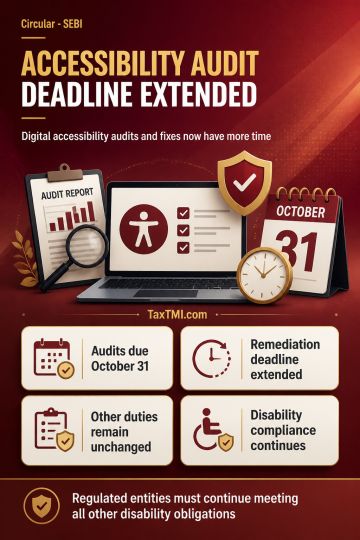
Digital accessibility audit and remediation deadlines extended, while all other disability-compliance obligations for regulated entities remain unchan...
ITAT held that where the payee has declared the receipts and discharged tax liability, the payer cannot be treated as an assessee in default under s.201/201(1A); the AO must first ascertain default before invoking disallowance. Applying this principle, the Tribunal found the taxpayer's contract involved a 4% supervision margin payable to the contractor for construction of an institutional facility and, given the charitable context and non-commencement of the project, afforded the assessee the benefit of doubt. The AO was directed to treat only the 4% margin as fees chargeable under s.194J. Other administrative and allied payments were sustained. Grounds were accordingly partly allowed.
ITAT held that where the payee has declared the receipts and discharged tax liability, the payer cannot be treated as an assessee in default under s.201/201(1A); the AO must first ascertain default before invoking disallowance. Applying this principle, the Tribunal found the taxpayer's contract involved a 4% supervision margin payable to the contractor for construction of an institutional facility and, given the charitable context and non-commencement of the project, afforded the assessee the benefit of doubt. The AO was directed to treat only the 4% margin as fees chargeable under s.194J. Other administrative and allied payments were sustained. Grounds were accordingly partly allowed.
Note: It is a system-generated summary and is for quick reference only.
 TaxTMI
 of 4794







 Join Channel


 TaxTMI