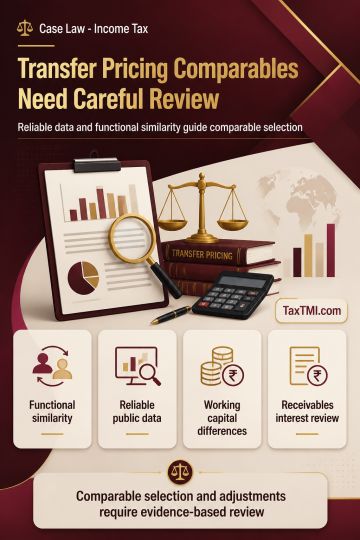
Transfer pricing comparability requires functional alignment, reliable financial data, and careful review of working capital and receivables adjustmen...
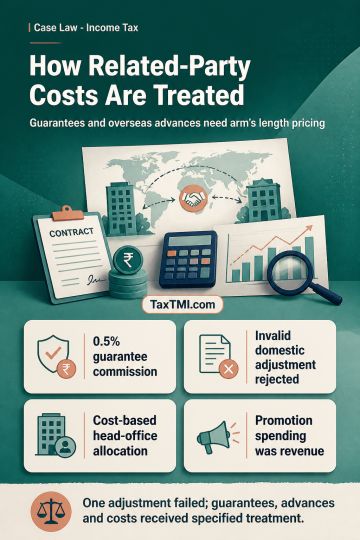
Transfer pricing rules require benchmarking corporate guarantees and associated-enterprise advances, while invalid domestic-transaction adjustments ca...
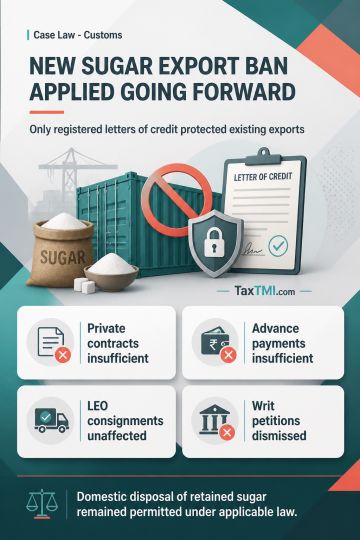
Prospective sugar export prohibition required registered letters of credit; private contracts and export quotas created no enforceable continuation ri...
CESTAT allowed the appeal in part: it upheld the original rejection of the declared transaction value, the re-determination of assessable value and duty, and the order of confiscation under s.111(d) & (m) of the Customs Act, while reducing the redemption fine in lieu of confiscation under s.125 to Rs.26,50,000 and setting aside the penalty imposed under s.114A. The Tribunal found the appellant's claim of bona fide import under the EPCG scheme not implausible and noted absence of findings of invoice manipulation or wilful suppression; it further held that once duty as assessed was paid without a s.28(8) demand, imposition of s.114A penalty was untenable.
CESTAT allowed the appeal in part: it upheld the original rejection of the declared transaction value, the re-determination of assessable value and duty, and the order of confiscation under s.111(d) & (m) of the Customs Act, while reducing the redemption fine in lieu of confiscation under s.125 to Rs.26,50,000 and setting aside the penalty imposed under s.114A. The Tribunal found the appellant's claim of bona fide import under the EPCG scheme not implausible and noted absence of findings of invoice manipulation or wilful suppression; it further held that once duty as assessed was paid without a s.28(8) demand, imposition of s.114A penalty was untenable.
Note: It is a system-generated summary and is for quick reference only.
 TaxTMI
 of 4801












 Join Channel


 TaxTMI