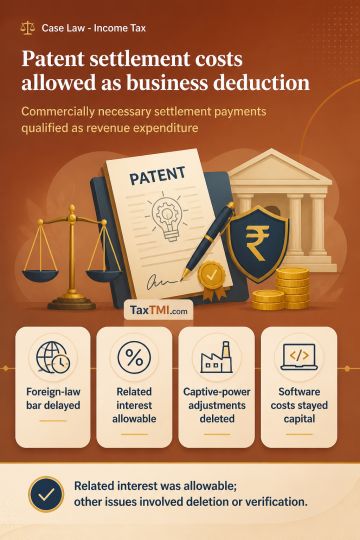
Patent-settlement expenditure treated as commercially expedient revenue outlay, with foreign-law restrictions inapplicable before the prospective amen...
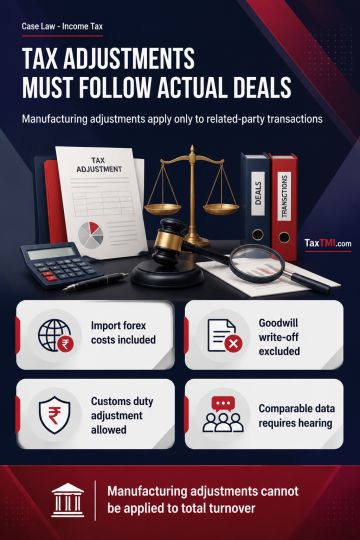
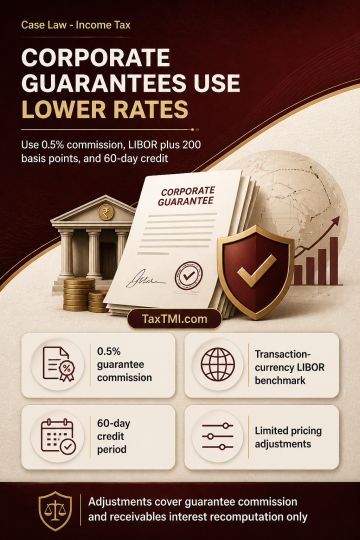
International transaction benchmarking restricts transfer pricing adjustments to associated-enterprise dealings, while functional comparability govern...
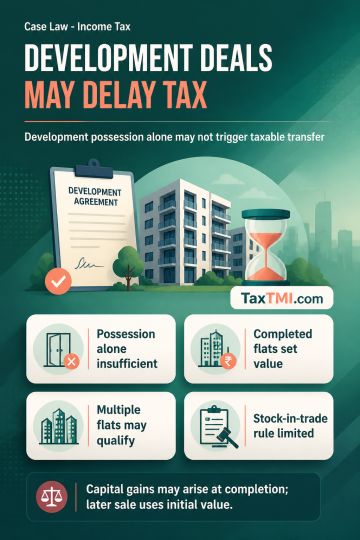
Joint development agreements defer taxable transfer where possession lacks part performance, while completed flats determine consideration and exempti...
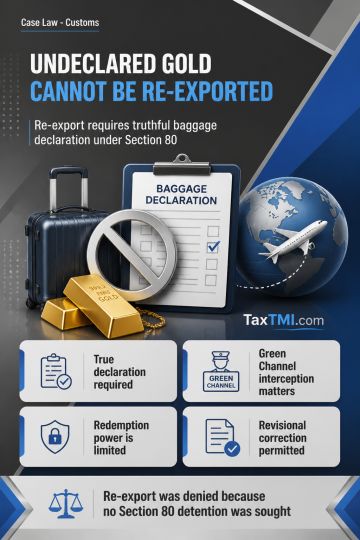
Passenger baggage re-export requires true declaration and cannot be granted indirectly through discretionary redemption of undeclared prohibited goods...
CESTAT allowed the appeal in part: it upheld the original rejection of the declared transaction value, the re-determination of assessable value and duty, and the order of confiscation under s.111(d) & (m) of the Customs Act, while reducing the redemption fine in lieu of confiscation under s.125 to Rs.26,50,000 and setting aside the penalty imposed under s.114A. The Tribunal found the appellant's claim of bona fide import under the EPCG scheme not implausible and noted absence of findings of invoice manipulation or wilful suppression; it further held that once duty as assessed was paid without a s.28(8) demand, imposition of s.114A penalty was untenable.
CESTAT allowed the appeal in part: it upheld the original rejection of the declared transaction value, the re-determination of assessable value and duty, and the order of confiscation under s.111(d) & (m) of the Customs Act, while reducing the redemption fine in lieu of confiscation under s.125 to Rs.26,50,000 and setting aside the penalty imposed under s.114A. The Tribunal found the appellant's claim of bona fide import under the EPCG scheme not implausible and noted absence of findings of invoice manipulation or wilful suppression; it further held that once duty as assessed was paid without a s.28(8) demand, imposition of s.114A penalty was untenable.
Note: It is a system-generated summary and is for quick reference only.
 TaxTMI
 of 4801



 Join Channel


 TaxTMI