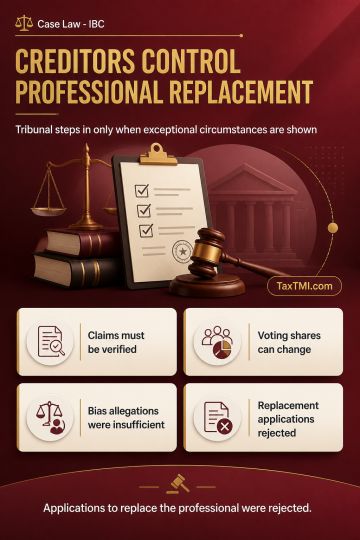
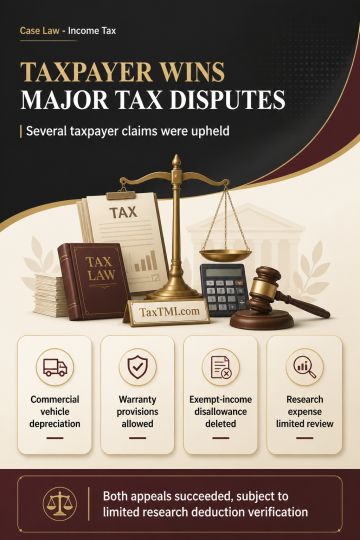
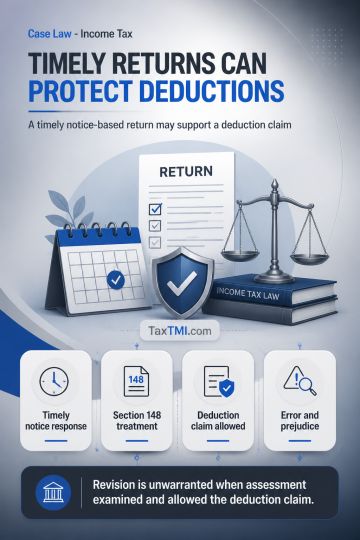
Commercial vehicle depreciation, scientifically determined warranty provisions and exempt-income disallowances were resolved in favour of the taxpayer...
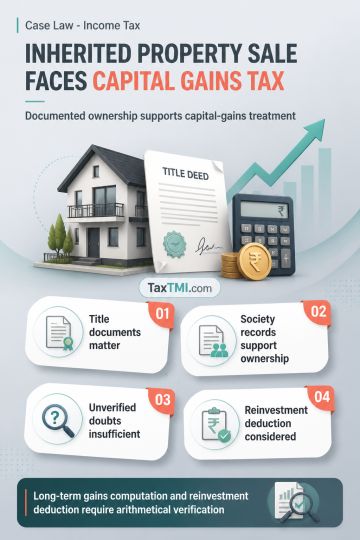
Inherited property sale proceeds require capital-gains treatment where ownership is supported by evidence, not suspicion or unverified signature doubt...
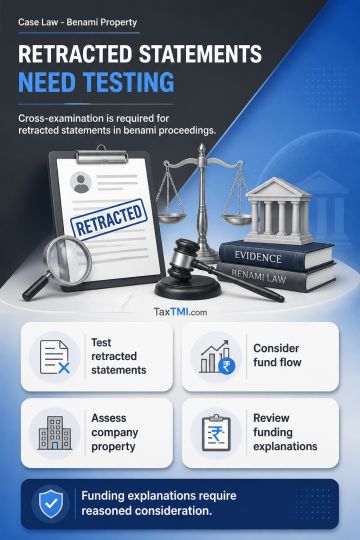
Cross-examination of retracted statements is essential where foundational evidence supports a benami allegation and documented funding explanations re...
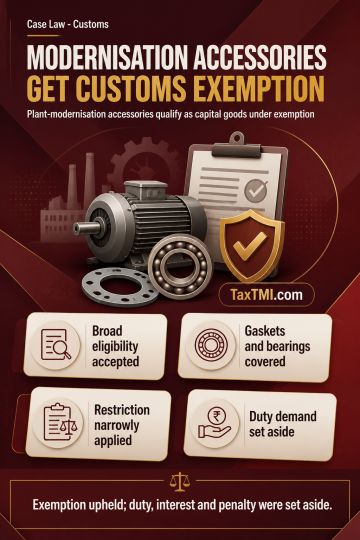
Capital-goods exemption covers plant-modernisation accessories, while the import restriction applies only to earlier capital-goods components and spar...
CESTAT allowed the appeal in part: it upheld the original rejection of the declared transaction value, the re-determination of assessable value and duty, and the order of confiscation under s.111(d) & (m) of the Customs Act, while reducing the redemption fine in lieu of confiscation under s.125 to Rs.26,50,000 and setting aside the penalty imposed under s.114A. The Tribunal found the appellant's claim of bona fide import under the EPCG scheme not implausible and noted absence of findings of invoice manipulation or wilful suppression; it further held that once duty as assessed was paid without a s.28(8) demand, imposition of s.114A penalty was untenable.
CESTAT allowed the appeal in part: it upheld the original rejection of the declared transaction value, the re-determination of assessable value and duty, and the order of confiscation under s.111(d) & (m) of the Customs Act, while reducing the redemption fine in lieu of confiscation under s.125 to Rs.26,50,000 and setting aside the penalty imposed under s.114A. The Tribunal found the appellant's claim of bona fide import under the EPCG scheme not implausible and noted absence of findings of invoice manipulation or wilful suppression; it further held that once duty as assessed was paid without a s.28(8) demand, imposition of s.114A penalty was untenable.
Note: It is a system-generated summary and is for quick reference only.
 TaxTMI
 of 4800



 Join Channel


 TaxTMI