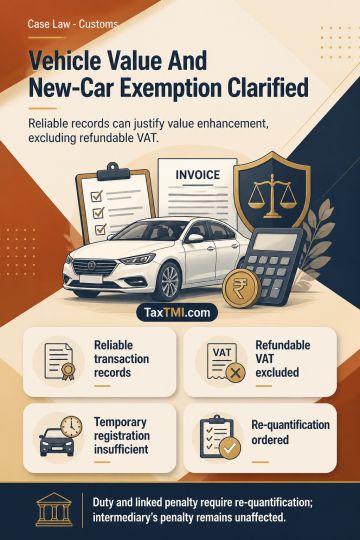
Transaction value rejection requires reliable corroboration; refundable VAT is excluded and temporary registration does not defeat new-vehicle exempti...
Appellate jurisdiction remains available where a wrist-worn gold ornament cannot conclusively be characterised as imported baggage at the preliminary ...
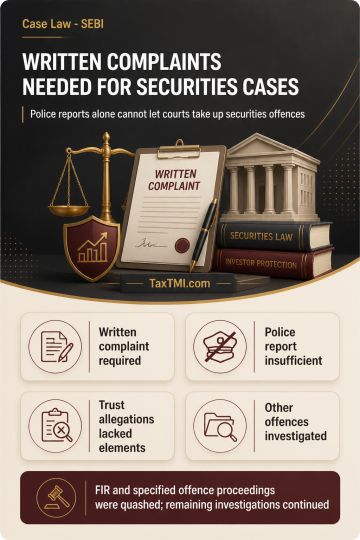
Written complaint requirement bars cognizance on police reports for securities offences, while unsupported breach of trust and cheating allegations fa...
Risk-based postal import clearance standardises electronic assessment, document requests, duty realisation and delivery controls at Foreign Post Offic...
Page of 4798
Press 'Enter' after typing page number.
301 to 320 of 95954 Results
❮
❯
❯❯
0 / 200
Expand Note
Add to Folder
No Folders have been created
+
Are you sure you want to delete "My most important" ?
NCLAT dismissed the application for interim injunction, holding that the applicant failed to establish the requisite balance of convenience and the triple criteria for restraining the general body meeting scheduled for 29.10.2024. The Tribunal found preservation of share value impracticable if the underlying company is commercially stifled, and emphasized that the spirit of the IBC favors permitting related companies to continue commercial operations irrespective of control disputes. Disputes over control and unauthorized capital increase were characterized as matters for oppression and mismanagement proceedings under the Companies Act, properly within the NCLT's jurisdiction. Given these considerations, including the failure of the final limb of the test, injunctive relief was refused and the application dismissed.
NCLAT dismissed the application for interim injunction, holding that the applicant failed to establish the requisite balance of convenience and the triple criteria for restraining the general body meeting scheduled for 29.10.2024. The Tribunal found preservation of share value impracticable if the underlying company is commercially stifled, and emphasized that the spirit of the IBC favors permitting related companies to continue commercial operations irrespective of control disputes. Disputes over control and unauthorized capital increase were characterized as matters for oppression and mismanagement proceedings under the Companies Act, properly within the NCLT's jurisdiction. Given these considerations, including the failure of the final limb of the test, injunctive relief was refused and the application dismissed.
Note: It is a system-generated summary and is for quick reference only.
 TaxTMI
 of 4798





 Join Channel


 TaxTMI