Inherited property sale proceeds require capital-gains treatment where ownership is supported by evidence, not suspicion or unverified signature doubt...
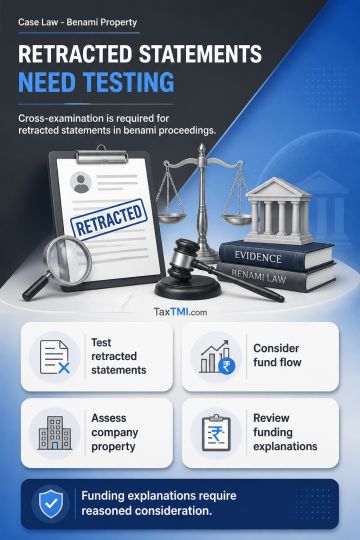
Cross-examination of retracted statements is essential where foundational evidence supports a benami allegation and documented funding explanations re...
Capital-goods exemption covers plant-modernisation accessories, while the import restriction applies only to earlier capital-goods components and spar...
Constitutional judicial review permits challenges to ECIRs and connected money-laundering proceedings where coercive action affects fundamental intere...
The AT held that, following consideration of the DGAP report and documentary verification, the DGAP's methodology for apportioning ITC to project costs was appropriate and captured the economic effect of GST implementation. The Tribunal found that no reduction in GST rate nor incremental benefit of Input Tax Credit accrued to the Respondent in respect of the three impugned projects; accordingly, the requirements of Section 171 of the CGST Act are not attracted. Proceedings against the Respondent in relation to those projects were dismissed and the application disposed of.
The AT held that, following consideration of the DGAP report and documentary verification, the DGAP's methodology for apportioning ITC to project costs was appropriate and captured the economic effect of GST implementation. The Tribunal found that no reduction in GST rate nor incremental benefit of Input Tax Credit accrued to the Respondent in respect of the three impugned projects; accordingly, the requirements of Section 171 of the CGST Act are not attracted. Proceedings against the Respondent in relation to those projects were dismissed and the application disposed of.
Note: It is a system-generated summary and is for quick reference only.
 TaxTMI
 of 4786















 Join Channel


 TaxTMI