Educational approval requires mandatory State registration, but incidental surplus and trustee-owned land do not prove private benefit or profit motiv...
Judicial review of settlement orders cannot reopen settled customs notices, while statutory interest remains subject to verification and quantificatio...
Customs Broker licence lending for consideration justified revocation where exporter authorisation and client verification obligations were also breac...
Fraudulent import documents suspend limitation protection, while redemption of confiscated goods requires duty and interest despite bona fide purchase...
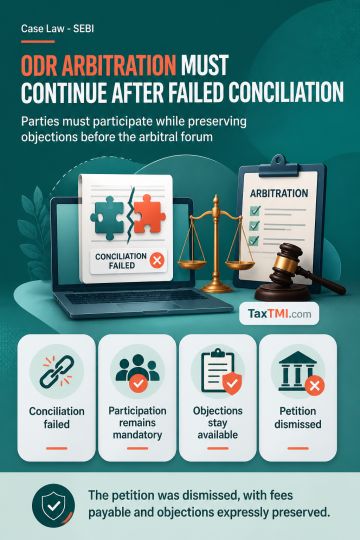
ODR arbitration participation remains mandatory after failed conciliation, while jurisdictional and maintainability objections stay available before t...
Transparency in technical bid evaluation requires disclosed standards and recorded reasons; opaque scoring invalidated tender awards and required fres...
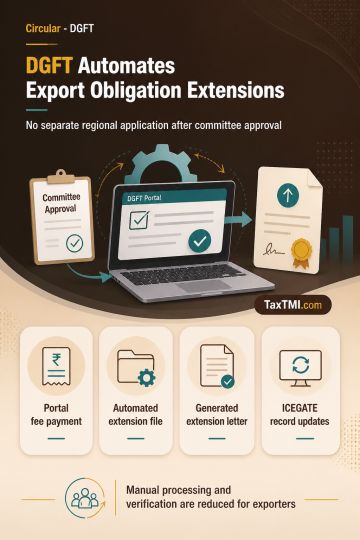
Automated export obligation extensions remove separate regional applications after committee approval for Advance Authorisation and EPCG authorisation...
Page of 4828
Press 'Enter' after typing page number.
441 to 460 of 96556 Results
❮
❯
❯❯
0 / 200
Expand Note
Add to Folder
No Folders have been created
+
Are you sure you want to delete "My most important" ?
CESTAT allowed the appeal and held that the impugned mixed-cereal products are correctly classifiable under CETH 2106 as food preparations, rejecting the Revenue's reclassification to CETSH 1901. The Tribunal found the Revenue admitted the goods were mixed cereals but failed to establish they constituted "preparations of flours" derived from starch or malt extract or otherwise possessing the essential character required for Heading 1901; no evidentiary change of fact or law justified revising a long-accepted classification. The demands for differential excise duty and the penalty under Rule 25, CEX Rules 2002, premised on reclassification were unsustainable and set aside.
CESTAT allowed the appeal and held that the impugned mixed-cereal products are correctly classifiable under CETH 2106 as food preparations, rejecting the Revenue's reclassification to CETSH 1901. The Tribunal found the Revenue admitted the goods were mixed cereals but failed to establish they constituted "preparations of flours" derived from starch or malt extract or otherwise possessing the essential character required for Heading 1901; no evidentiary change of fact or law justified revising a long-accepted classification. The demands for differential excise duty and the penalty under Rule 25, CEX Rules 2002, premised on reclassification were unsustainable and set aside.
Note: It is a system-generated summary and is for quick reference only.
 TaxTMI
  TaxTMI
 of 4828
















 Join Channel