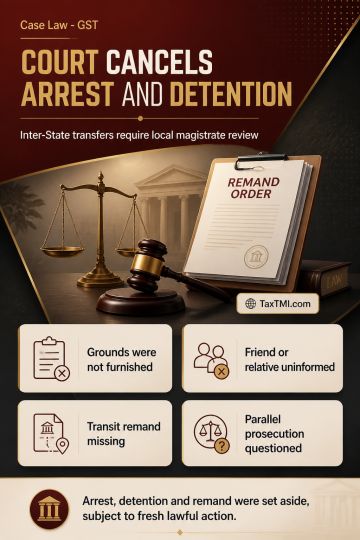
Arrest safeguards and transit remand requirements invalidated detention following inter-State transfer without communicated grounds or magistrate auth...
Arrest safeguards require disclosed grounds, relative intimation and transit remand, while duplicate prosecution under the CGST framework is unsustain...
Document Identification Number defects can invalidate GST assessments, with delayed challenges entertained conditionally where patent irregularities e...
Windmill commissioning evidence supported higher depreciation where grid connection and electricity generation proved operational use before the relev...
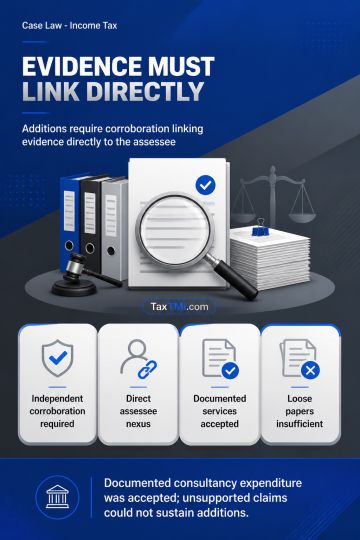
Pharmaceutical promotion and transfer-pricing comparability principles limited disallowances, while uncorroborated search allegations and unsupported ...
Business expenditure substantiation supports scrap credits, statutory payments and expense claims, while depreciation requires proof of actual busines...
The HC dismissed the petitions for lack of maintainability, holding that petitioners failed to justify bypassing the statutory requirement to exhaust alternative remedies against assessment orders and had falsely averred the absence of any effective remedy. The Court observed that GST liability under Joint Development Agreements raises fact-intensive issues-requiring examination of the agreement terms and factual matrix-which are appropriately determined by the appellate authorities under the Act. No breach of natural justice was alleged. Relying on established precedents concerning exhaustion of remedies, the Court declined to entertain the writ petitions but granted petitioners liberty to institute statutory appeals against the impugned assessment orders.
The HC dismissed the petitions for lack of maintainability, holding that petitioners failed to justify bypassing the statutory requirement to exhaust alternative remedies against assessment orders and had falsely averred the absence of any effective remedy. The Court observed that GST liability under Joint Development Agreements raises fact-intensive issues-requiring examination of the agreement terms and factual matrix-which are appropriately determined by the appellate authorities under the Act. No breach of natural justice was alleged. Relying on established precedents concerning exhaustion of remedies, the Court declined to entertain the writ petitions but granted petitioners liberty to institute statutory appeals against the impugned assessment orders.
Note: It is a system-generated summary and is for quick reference only.
 TaxTMI
 of 4792



















 Join Channel


 TaxTMI