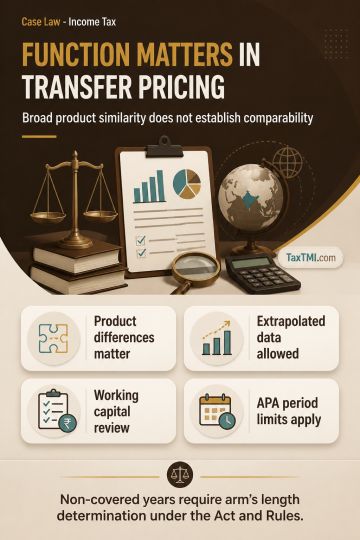
Transfer pricing comparability requires functional alignment and permits working capital adjustment, while APA margins cannot govern non-covered years...
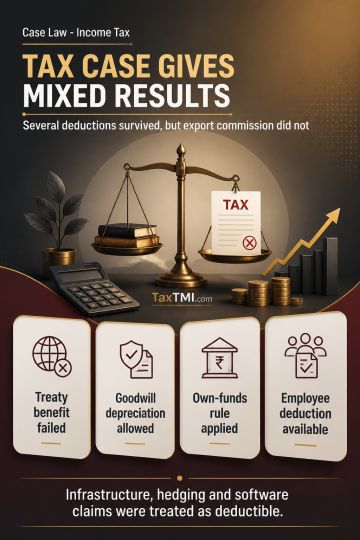
Treaty benefit, goodwill depreciation and hedging costs: export commission disallowed, while key business deductions and depreciation claims succeeded...
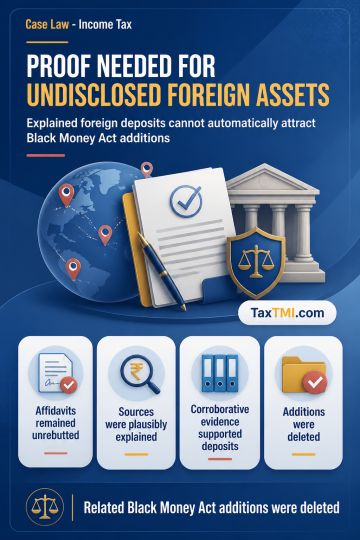
Undisclosed foreign asset classification requires an unexplained source; unrebutted affidavits and corroborative evidence defeated the Black Money Act...
The AAR holds that the applicant's material, being the residue ("thippi") generated in Stage-I cassava starch manufacture and sold for further processing/animal feed, is not cassava flour or cassava starch and is classifiable as a residue/waste under Chapter 23 (tariff item 2303 1000). The material is marketable but arises as a by-product/residue of a starch production process and therefore falls outside Chapter 11 classification. The applicant is not entitled to the exemption under Notification No. 02/2017-CT(Rate) in respect of tariff item 1106, and the supplies attract GST; accordingly the applicant must obtain registration and discharge applicable tax.
The AAR holds that the applicant's material, being the residue ("thippi") generated in Stage-I cassava starch manufacture and sold for further processing/animal feed, is not cassava flour or cassava starch and is classifiable as a residue/waste under Chapter 23 (tariff item 2303 1000). The material is marketable but arises as a by-product/residue of a starch production process and therefore falls outside Chapter 11 classification. The applicant is not entitled to the exemption under Notification No. 02/2017-CT(Rate) in respect of tariff item 1106, and the supplies attract GST; accordingly the applicant must obtain registration and discharge applicable tax.
Note: It is a system-generated summary and is for quick reference only.
 TaxTMI
 of 4805







 Join Channel


 TaxTMI
