Tax deduction compliance and payee income recognition govern consultancy disallowance, while no exempt income prevents related expenditure disallowanc...
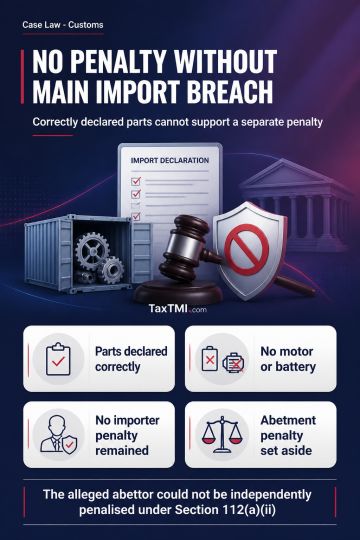
Derivative abetment liability fails when correctly declared imported components establish no underlying improper importation by the principal importer...
Page of 4805
Press 'Enter' after typing page number.
701 to 720 of 96100 Results
❮
❯
❯❯
0 / 200
Expand Note
Add to Folder
No Folders have been created
+
Are you sure you want to delete "My most important" ?
The AAR holds that the applicant's material, being the residue ("thippi") generated in Stage-I cassava starch manufacture and sold for further processing/animal feed, is not cassava flour or cassava starch and is classifiable as a residue/waste under Chapter 23 (tariff item 2303 1000). The material is marketable but arises as a by-product/residue of a starch production process and therefore falls outside Chapter 11 classification. The applicant is not entitled to the exemption under Notification No. 02/2017-CT(Rate) in respect of tariff item 1106, and the supplies attract GST; accordingly the applicant must obtain registration and discharge applicable tax.
The AAR holds that the applicant's material, being the residue ("thippi") generated in Stage-I cassava starch manufacture and sold for further processing/animal feed, is not cassava flour or cassava starch and is classifiable as a residue/waste under Chapter 23 (tariff item 2303 1000). The material is marketable but arises as a by-product/residue of a starch production process and therefore falls outside Chapter 11 classification. The applicant is not entitled to the exemption under Notification No. 02/2017-CT(Rate) in respect of tariff item 1106, and the supplies attract GST; accordingly the applicant must obtain registration and discharge applicable tax.
Note: It is a system-generated summary and is for quick reference only.
 TaxTMI
 of 4805








 Join Channel


 TaxTMI