Business expenditure deduction requires proof of genuine commission payments and commercial allowability; turnover growth alone cannot validate the cl...
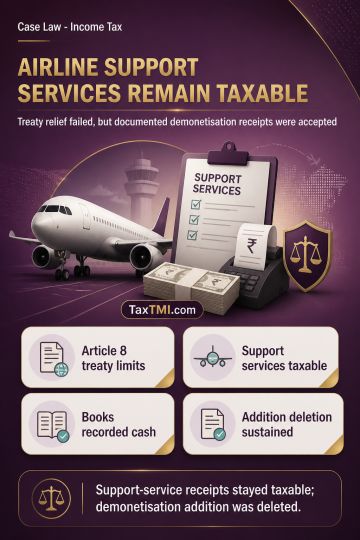
Article 8 treaty coverage excluded third-party airline support services, while documented demonetisation cash receipts remained accepted business inco...
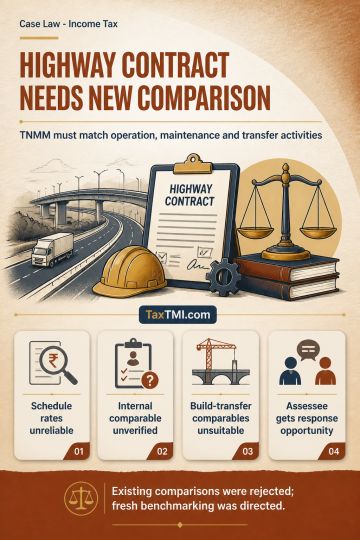
Functional comparability under TNMM requires highway contract benchmarks to reflect operation, maintenance and transfer activities, requiring fresh be...
The AAR holds that the applicant's material, being the residue ("thippi") generated in Stage-I cassava starch manufacture and sold for further processing/animal feed, is not cassava flour or cassava starch and is classifiable as a residue/waste under Chapter 23 (tariff item 2303 1000). The material is marketable but arises as a by-product/residue of a starch production process and therefore falls outside Chapter 11 classification. The applicant is not entitled to the exemption under Notification No. 02/2017-CT(Rate) in respect of tariff item 1106, and the supplies attract GST; accordingly the applicant must obtain registration and discharge applicable tax.
The AAR holds that the applicant's material, being the residue ("thippi") generated in Stage-I cassava starch manufacture and sold for further processing/animal feed, is not cassava flour or cassava starch and is classifiable as a residue/waste under Chapter 23 (tariff item 2303 1000). The material is marketable but arises as a by-product/residue of a starch production process and therefore falls outside Chapter 11 classification. The applicant is not entitled to the exemption under Notification No. 02/2017-CT(Rate) in respect of tariff item 1106, and the supplies attract GST; accordingly the applicant must obtain registration and discharge applicable tax.
Note: It is a system-generated summary and is for quick reference only.
 TaxTMI
 of 4805




 Join Channel


 TaxTMI