Service of notice and contractual debt acknowledgment preserved insolvency admission against a corporate guarantor despite limitation and natural just...
Original works exemption excludes standalone boulder transportation, leaving subcontracted railway-project transport services subject to service tax l...
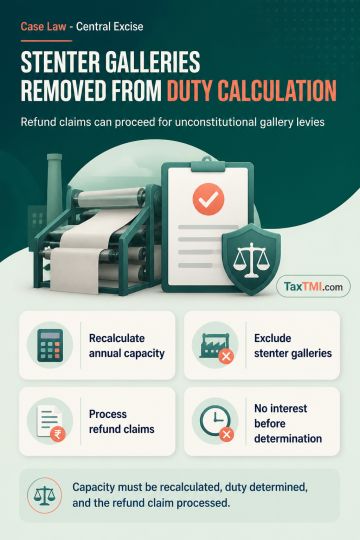
Annual production capacity determinations excluding stenter galleries support refunds for unconstitutional excise levies without an unjust-enrichment ...
Vicarious liability for cheque dishonour requires specific allegations of responsibility and cheque signatory; generic director allegations cannot sus...
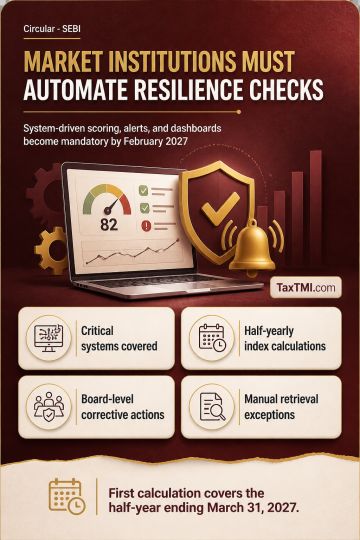
IT Resilience Index requires market infrastructure institutions to automate resilience scoring, early warnings, and continuous service-delivery monito...
CESTAT allowed the appeal, holding that the anonymized appellant, a VTP engaged under a MoU with a government implementing agency, rendered NCVT/NSDC/SSC-approved MES/SDIS courses which fall within the exemption for "approved vocational education course" under Section 66D(1)(iii) of the Finance Act and Sl. No. 9A of Notification No. 25/2012-ST. The Tribunal applied the ratio of earlier CESTAT authority and concluded the training activity qualified for notification immunity from service tax; accordingly the meritorious demand was set aside. Further, because departmental correspondence showed knowledge of the activity and no suppression of facts, invocation of the extended period of limitation was unsustainable and the demand was barred by limitation.
CESTAT allowed the appeal, holding that the anonymized appellant, a VTP engaged under a MoU with a government implementing agency, rendered NCVT/NSDC/SSC-approved MES/SDIS courses which fall within the exemption for "approved vocational education course" under Section 66D(1)(iii) of the Finance Act and Sl. No. 9A of Notification No. 25/2012-ST. The Tribunal applied the ratio of earlier CESTAT authority and concluded the training activity qualified for notification immunity from service tax; accordingly the meritorious demand was set aside. Further, because departmental correspondence showed knowledge of the activity and no suppression of facts, invocation of the extended period of limitation was unsustainable and the demand was barred by limitation.
Note: It is a system-generated summary and is for quick reference only.
 TaxTMI
  TaxTMI
 of 4828















 Join Channel