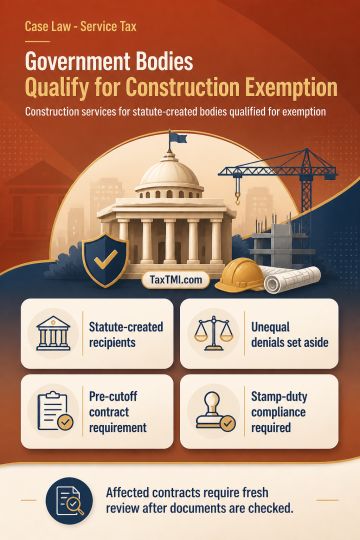
Governmental authority status supports construction-service exemption, while pre-cutoff contract and stamp-duty compliance requires verification on re...
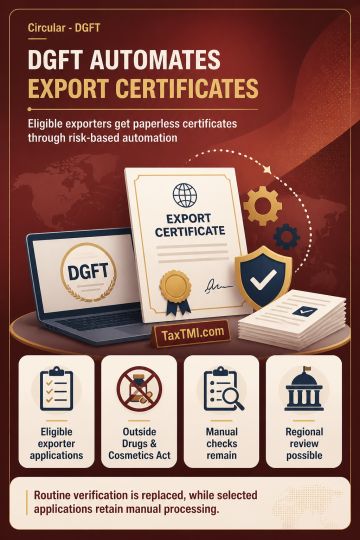
Automated Free Sale and Commerce Certificates enable paperless processing while retaining risk-based manual verification for selected exporter applica...
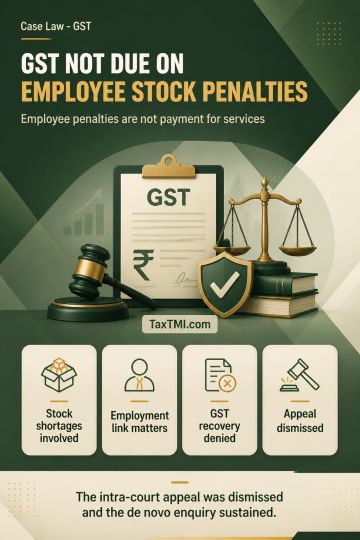
Employee stock-shortage penalties do not constitute consideration for services, preventing GST collection under Schedule II in employment relationship...
ITAT allowed the appeal of the assessee (an AOP), held that receipts characterised as donations returned to the entity did not attract exclusion under principles of mutuality, and directed the AO to delete the disallowances and additions. The Tribunal found the assessee's dominant activity (petrol bunk business) involved sales to members and non-members, discounts/rebates constituted ordinary business expenditure and were allowable under the tax law when net profit was offered to tax. The Tribunal rejected the AO's recharacterisation and reassessment under jurisdictional review, concluded there was identity between contributors and beneficiaries, distinguished the contrary authority, and upheld the assessee's return of income.
ITAT allowed the appeal of the assessee (an AOP), held that receipts characterised as donations returned to the entity did not attract exclusion under principles of mutuality, and directed the AO to delete the disallowances and additions. The Tribunal found the assessee's dominant activity (petrol bunk business) involved sales to members and non-members, discounts/rebates constituted ordinary business expenditure and were allowable under the tax law when net profit was offered to tax. The Tribunal rejected the AO's recharacterisation and reassessment under jurisdictional review, concluded there was identity between contributors and beneficiaries, distinguished the contrary authority, and upheld the assessee's return of income.
Note: It is a system-generated summary and is for quick reference only.
 TaxTMI
  TaxTMI
 of 4828






 Join Channel


