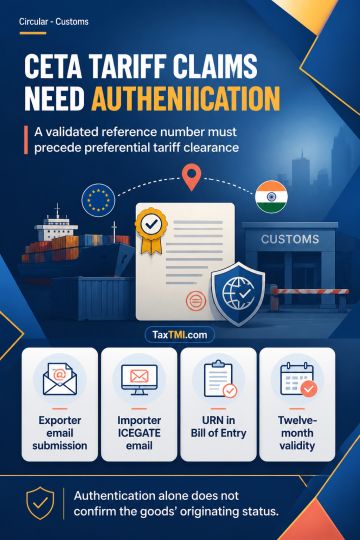
Origin Declaration authentication governs preferential tariff claims under India-UK CETA, requiring a validated reference number before import clearan...
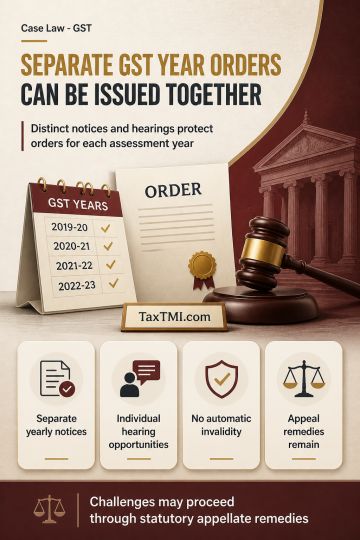
Separate assessment orders for different years remain valid when distinct notices and hearing opportunities prevent prejudice from combined proceeding...
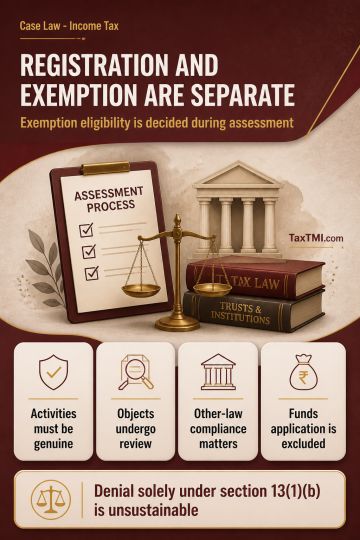
Defined public benefit can retain charitable character; registration renewal requires examining genuine activities and legal compliance, not surplus a...
Capital reduction is distinct from share buy-back, preventing buy-back tax; restructuring interest and related business deductions also survive scruti...
The AAAR dismissed the appeal and held that import IGST paid via TR-6 challan is not an admissible document for claiming ITC because a TR-6 is a Treasury payment instrument and not a "bill of entry or any similar document" prescribed under the Customs Act or rules; consequently TR-6 (alone or read with SVB orders/letters) cannot support ITC. A re-assessed bill of entry, however, constitutes a prescribed document under r.36(1)(d) and thus may permit ITC, but such availment is governed by the time-bar in s.16(4) CGST, applied to IGST claims by s.20 IGST Act mutatis mutandis. Appeal dismissed.
The AAAR dismissed the appeal and held that import IGST paid via TR-6 challan is not an admissible document for claiming ITC because a TR-6 is a Treasury payment instrument and not a "bill of entry or any similar document" prescribed under the Customs Act or rules; consequently TR-6 (alone or read with SVB orders/letters) cannot support ITC. A re-assessed bill of entry, however, constitutes a prescribed document under r.36(1)(d) and thus may permit ITC, but such availment is governed by the time-bar in s.16(4) CGST, applied to IGST claims by s.20 IGST Act mutatis mutandis. Appeal dismissed.
Note: It is a system-generated summary and is for quick reference only.
 TaxTMI
 of 4803













 Join Channel


 TaxTMI
