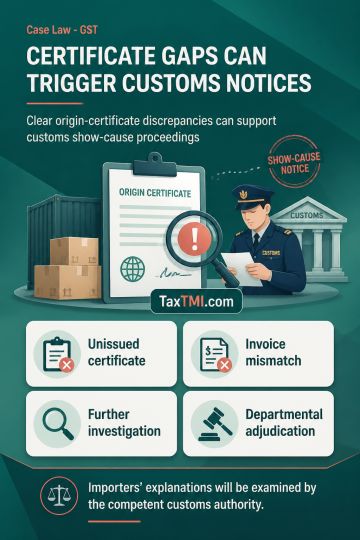
Jurisdictional facts in certificate-of-origin discrepancies can support customs show-cause proceedings, leaving factual explanations for departmental ...
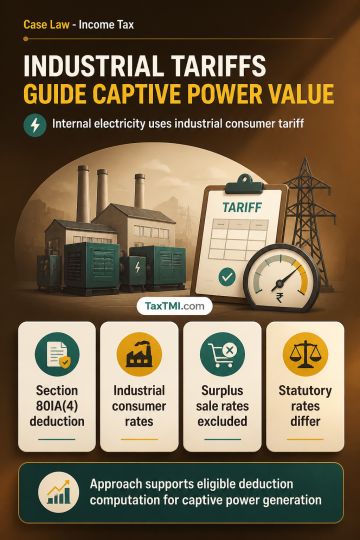
Market value for captive electricity consumption follows industrial consumer tariffs, supporting profit computation for the power generation deduction...
The AAAR dismissed the appeal and held that import IGST paid via TR-6 challan is not an admissible document for claiming ITC because a TR-6 is a Treasury payment instrument and not a "bill of entry or any similar document" prescribed under the Customs Act or rules; consequently TR-6 (alone or read with SVB orders/letters) cannot support ITC. A re-assessed bill of entry, however, constitutes a prescribed document under r.36(1)(d) and thus may permit ITC, but such availment is governed by the time-bar in s.16(4) CGST, applied to IGST claims by s.20 IGST Act mutatis mutandis. Appeal dismissed.
The AAAR dismissed the appeal and held that import IGST paid via TR-6 challan is not an admissible document for claiming ITC because a TR-6 is a Treasury payment instrument and not a "bill of entry or any similar document" prescribed under the Customs Act or rules; consequently TR-6 (alone or read with SVB orders/letters) cannot support ITC. A re-assessed bill of entry, however, constitutes a prescribed document under r.36(1)(d) and thus may permit ITC, but such availment is governed by the time-bar in s.16(4) CGST, applied to IGST claims by s.20 IGST Act mutatis mutandis. Appeal dismissed.
Note: It is a system-generated summary and is for quick reference only.
 TaxTMI
 of 4803



 Join Channel


 TaxTMI