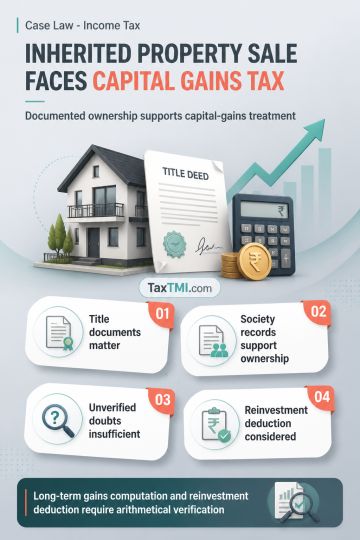
Inherited property sale proceeds require capital-gains treatment where ownership is supported by evidence, not suspicion or unverified signature doubt...
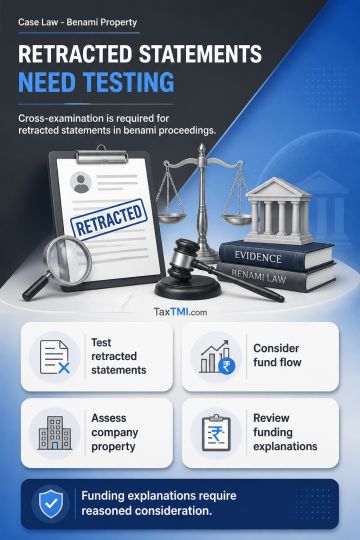
Cross-examination of retracted statements is essential where foundational evidence supports a benami allegation and documented funding explanations re...
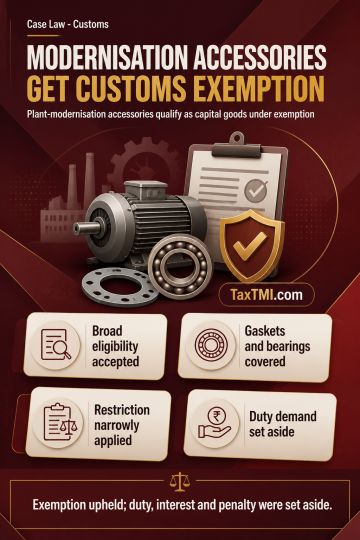
Capital-goods exemption covers plant-modernisation accessories, while the import restriction applies only to earlier capital-goods components and spar...
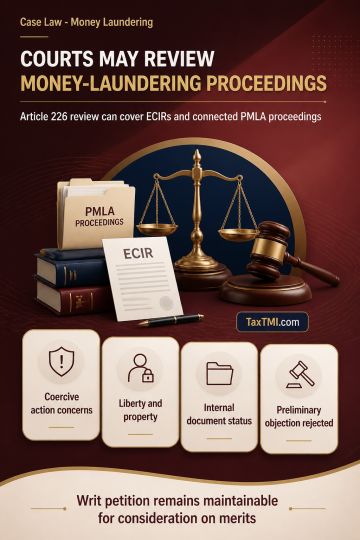
Constitutional judicial review permits challenges to ECIRs and connected money-laundering proceedings where coercive action affects fundamental intere...
AAR held that Minimum Guaranteed Off-take (MGO) charges constitute liquidated damages and do not amount to a "supply" or "consideration" under the CGST framework. Applying the definition of declared services in Schedule II(5)(e) and the Contract Act principles, the Authority found no requisite nexus between the payment and any obligational supply (i.e., agreeing to do, refrain or tolerate an act). MGO payments merely compensate for breach and are a monetary flow for loss, not the object of a contract; consequently they fall outside Section 7(1A)/Schedule II coverage and are not taxable under GST, particularly where the principal product supplied is outside GST ambit.
AAR held that Minimum Guaranteed Off-take (MGO) charges constitute liquidated damages and do not amount to a "supply" or "consideration" under the CGST framework. Applying the definition of declared services in Schedule II(5)(e) and the Contract Act principles, the Authority found no requisite nexus between the payment and any obligational supply (i.e., agreeing to do, refrain or tolerate an act). MGO payments merely compensate for breach and are a monetary flow for loss, not the object of a contract; consequently they fall outside Section 7(1A)/Schedule II coverage and are not taxable under GST, particularly where the principal product supplied is outside GST ambit.
Note: It is a system-generated summary and is for quick reference only.
 TaxTMI
 of 4805




 Join Channel


 TaxTMI