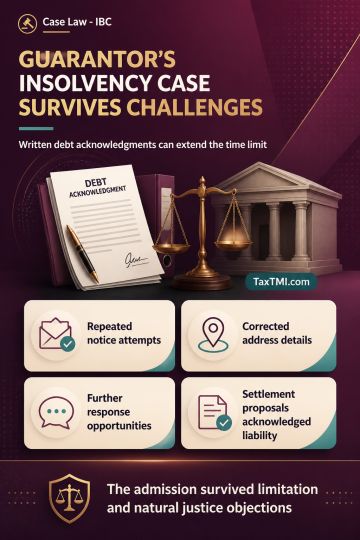
Service of notice and contractual debt acknowledgment preserved insolvency admission against a corporate guarantor despite limitation and natural just...
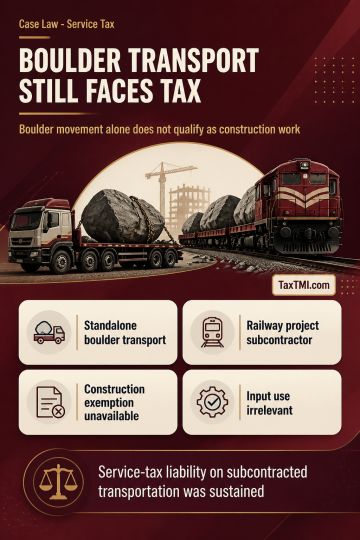
Original works exemption excludes standalone boulder transportation, leaving subcontracted railway-project transport services subject to service tax l...
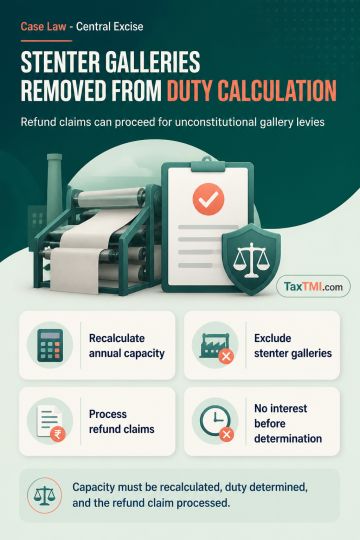
Annual production capacity determinations excluding stenter galleries support refunds for unconstitutional excise levies without an unjust-enrichment ...
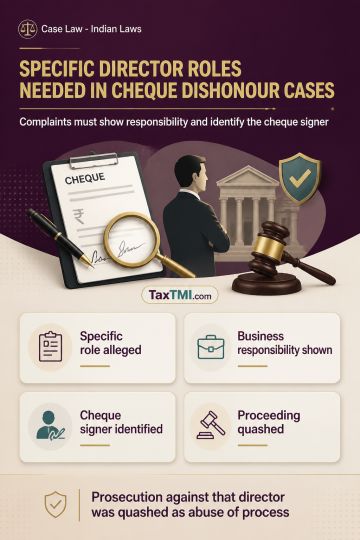
Vicarious liability for cheque dishonour requires specific allegations of responsibility and cheque signatory; generic director allegations cannot sus...
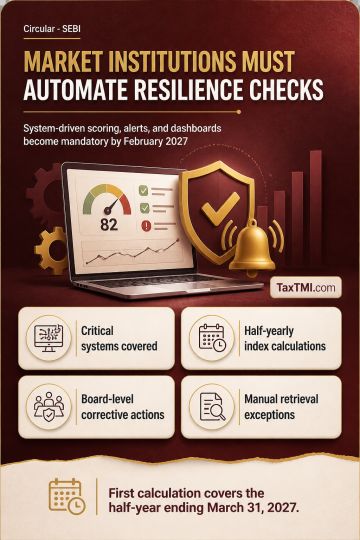
IT Resilience Index requires market infrastructure institutions to automate resilience scoring, early warnings, and continuous service-delivery monito...
Appellant's appeal before ITAT is dismissed for non-admission due to inordinate delay of 2,121 days; condonation of delay is refused for want of "sufficient cause" and bona fides. Tribunal found the appeal was prosecuted to exploit process of law after multiple earlier adjudications (AO, CIT(A), Coordinate Bench) concerning alleged bogus purchases where AO had made limited additions and earlier appellate fora rejected genuineness/identity. The Tribunal held equitable pleas of liberal or justice-oriented approach cannot override statutory limitation; public-policy underpinning of limitation bars revival of stale matters. Consequently, appeal is rejected purely on limitation grounds and is not admitted for adjudication.
Appellant's appeal before ITAT is dismissed for non-admission due to inordinate delay of 2,121 days; condonation of delay is refused for want of "sufficient cause" and bona fides. Tribunal found the appeal was prosecuted to exploit process of law after multiple earlier adjudications (AO, CIT(A), Coordinate Bench) concerning alleged bogus purchases where AO had made limited additions and earlier appellate fora rejected genuineness/identity. The Tribunal held equitable pleas of liberal or justice-oriented approach cannot override statutory limitation; public-policy underpinning of limitation bars revival of stale matters. Consequently, appeal is rejected purely on limitation grounds and is not admitted for adjudication.
Note: It is a system-generated summary and is for quick reference only.
 TaxTMI
  TaxTMI
 of 4828







 Join Channel