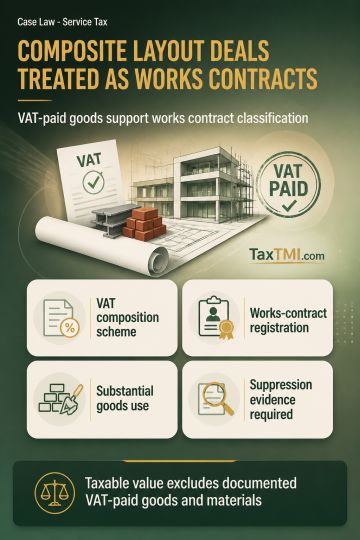
Works contract classification governs composite layout-development contracts where VAT-paid goods are transferred alongside construction and infrastru...
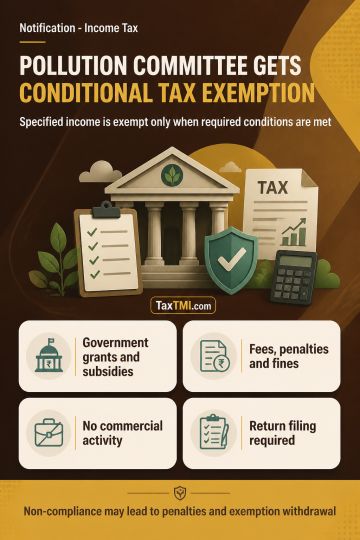
Specified income tax exemption for pollution control body remains conditional on non-commercial activity, unchanged income character, and return filin...
Jurisdictional facts in certificate-of-origin discrepancies can support customs show-cause proceedings, leaving factual explanations for departmental ...
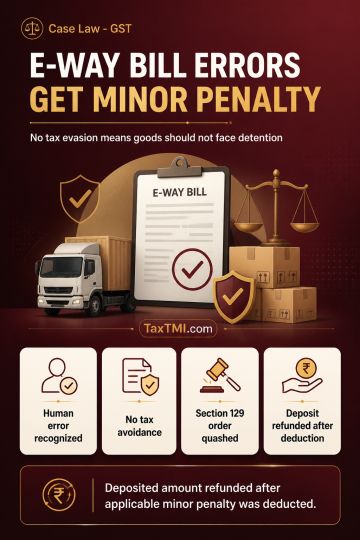
The HC allowed the petition and quashed the impugned detention orders, holding that detention of goods was unsustainable where the goods, moving under a commercial agreement with a government entity, were accompanied by a genuine tax invoice and an e-way bill that expired due to a vehicular breakdown; a fresh e-way bill was generated prior to the issuance of an order under s.129(3) of the GST Act. The court found no evidence of mens rea to evade tax, and held that mere expiry of an e-way bill, in the context of an unexplained mechanical delay and prompt re-generation of the document, cannot be equated with intent to evade tax.
The HC allowed the petition and quashed the impugned detention orders, holding that detention of goods was unsustainable where the goods, moving under a commercial agreement with a government entity, were accompanied by a genuine tax invoice and an e-way bill that expired due to a vehicular breakdown; a fresh e-way bill was generated prior to the issuance of an order under s.129(3) of the GST Act. The court found no evidence of mens rea to evade tax, and held that mere expiry of an e-way bill, in the context of an unexplained mechanical delay and prompt re-generation of the document, cannot be equated with intent to evade tax.
Note: It is a system-generated summary and is for quick reference only.
 TaxTMI
 of 4805










 Join Channel


 TaxTMI