Section 80P deduction covers Souharda credit societies, including qualifying surplus-deposit interest, subject to member KYC verification for cash dep...
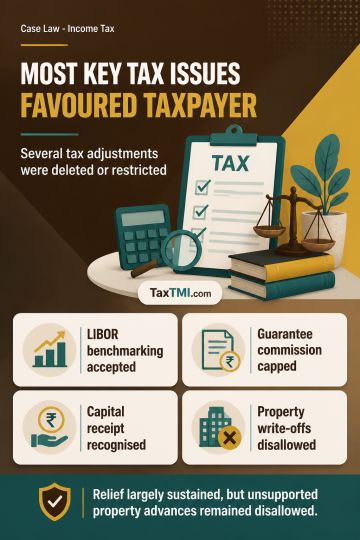
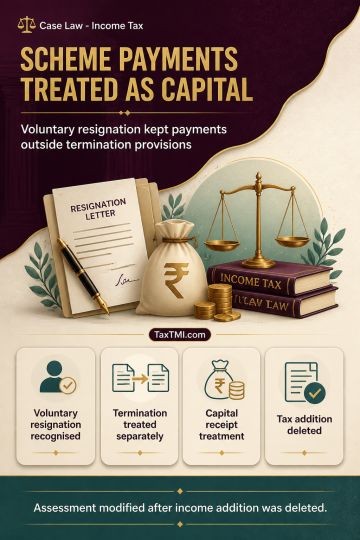
Transfer-pricing benchmarking and capital-receipt principles sustained taxpayer relief, while unsupported property-advance write-offs remained disallo...
Pre-existing operational debt disputes require genuine evidence, while undirected running-account payments may be appropriated on a first-in-first-out...
Agency in CNG distribution makes outlet operators commission agents, rendering taxable Business Auxiliary Service rather than purchasing goods for res...
The HC allowed the petition and quashed the impugned detention orders, holding that detention of goods was unsustainable where the goods, moving under a commercial agreement with a government entity, were accompanied by a genuine tax invoice and an e-way bill that expired due to a vehicular breakdown; a fresh e-way bill was generated prior to the issuance of an order under s.129(3) of the GST Act. The court found no evidence of mens rea to evade tax, and held that mere expiry of an e-way bill, in the context of an unexplained mechanical delay and prompt re-generation of the document, cannot be equated with intent to evade tax.
The HC allowed the petition and quashed the impugned detention orders, holding that detention of goods was unsustainable where the goods, moving under a commercial agreement with a government entity, were accompanied by a genuine tax invoice and an e-way bill that expired due to a vehicular breakdown; a fresh e-way bill was generated prior to the issuance of an order under s.129(3) of the GST Act. The court found no evidence of mens rea to evade tax, and held that mere expiry of an e-way bill, in the context of an unexplained mechanical delay and prompt re-generation of the document, cannot be equated with intent to evade tax.
Note: It is a system-generated summary and is for quick reference only.
 TaxTMI
 of 4805















 Join Channel


 TaxTMI