Development agreements require legal possession or effective enjoyment for capital gains transfer; permissive possession and deferred consideration de...
Prolonged sterilisation of development rights supports capital-gains treatment, while business-income disallowances cannot govern capital-gains comput...
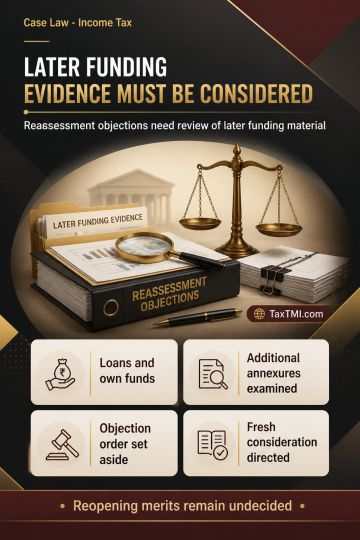
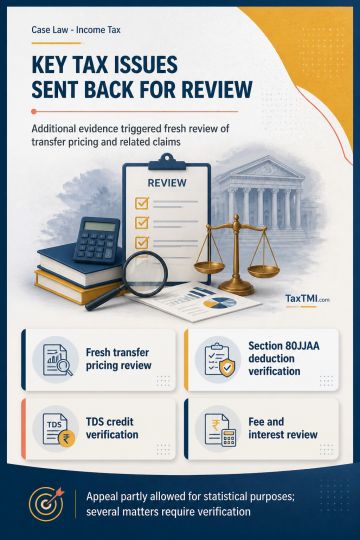
Additional evidence in transfer pricing dispute leads to fresh examination, while tax deductions, TDS credit, fee and refund interest require verifica...
Category II AIF pass-through taxation preserves non-business income character; investment receipts cannot be reclassified without applying recognised ...
The ITAT dismissed the assessee's appeal, upholding the levy of penalty under s.271(1)(c) insofar as it relates to additions confirmed by the Tribunal; the assessee failed to demonstrate any error in the quantum of additions as upheld by CIT(A) and ITAT. The rectification under s.154 by DCIT, which granted carry-forward of past losses inadvertently omitted, did not constitute a computational mistake affecting the confirmed additions and therefore does not mitigate penalty exposure. Because no infirmity was shown in the appellate order, no recalibration of the penalty relative to the s.154 reduction was warranted and the impugned assessment and penalty stand affirmed.
The ITAT dismissed the assessee's appeal, upholding the levy of penalty under s.271(1)(c) insofar as it relates to additions confirmed by the Tribunal; the assessee failed to demonstrate any error in the quantum of additions as upheld by CIT(A) and ITAT. The rectification under s.154 by DCIT, which granted carry-forward of past losses inadvertently omitted, did not constitute a computational mistake affecting the confirmed additions and therefore does not mitigate penalty exposure. Because no infirmity was shown in the appellate order, no recalibration of the penalty relative to the s.154 reduction was warranted and the impugned assessment and penalty stand affirmed.
Note: It is a system-generated summary and is for quick reference only.
 TaxTMI
 of 4805












 Join Channel


 TaxTMI
