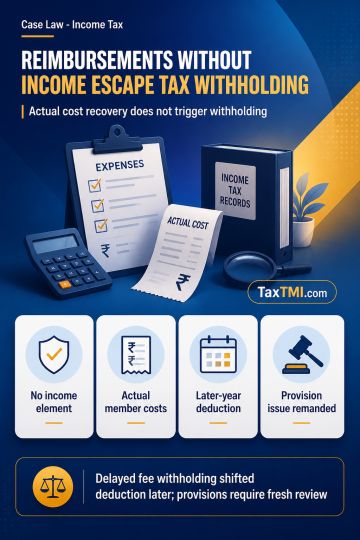
Pure reimbursement without income element escapes tax withholding, while delayed withholding and unsupported provisions face deferred or renewed scrut...
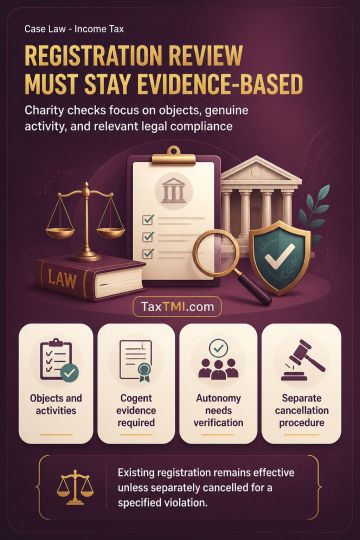
Public benefit requirement defeats charitable registration where residents' association services are reciprocal, member-only facilities governed by mu...
Exempt-income expenditure disallowance is confined to investments that actually generated exempt income, while supported business expenses remain dedu...
Objective characteristics and principal use govern mining-tyre classification, while fresh advance ruling applications may rely on additional technica...
The ITAT dismissed the assessee's appeal, upholding the levy of penalty under s.271(1)(c) insofar as it relates to additions confirmed by the Tribunal; the assessee failed to demonstrate any error in the quantum of additions as upheld by CIT(A) and ITAT. The rectification under s.154 by DCIT, which granted carry-forward of past losses inadvertently omitted, did not constitute a computational mistake affecting the confirmed additions and therefore does not mitigate penalty exposure. Because no infirmity was shown in the appellate order, no recalibration of the penalty relative to the s.154 reduction was warranted and the impugned assessment and penalty stand affirmed.
The ITAT dismissed the assessee's appeal, upholding the levy of penalty under s.271(1)(c) insofar as it relates to additions confirmed by the Tribunal; the assessee failed to demonstrate any error in the quantum of additions as upheld by CIT(A) and ITAT. The rectification under s.154 by DCIT, which granted carry-forward of past losses inadvertently omitted, did not constitute a computational mistake affecting the confirmed additions and therefore does not mitigate penalty exposure. Because no infirmity was shown in the appellate order, no recalibration of the penalty relative to the s.154 reduction was warranted and the impugned assessment and penalty stand affirmed.
Note: It is a system-generated summary and is for quick reference only.
 TaxTMI
 of 4803

















 Join Channel


 TaxTMI
