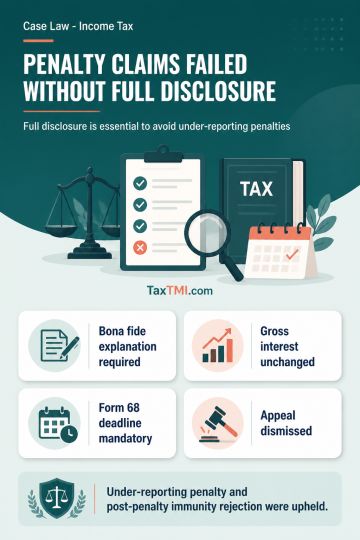
Bona fide disclosure requirements govern under-reporting penalties, and post-penalty immunity applications cannot secure available statutory protectio...
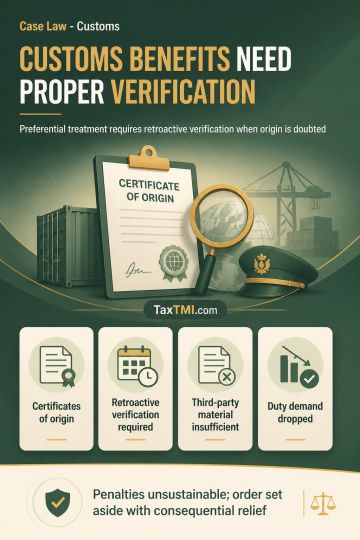
Certificate-of-origin verification procedure governs preferential customs benefits; denial without retroactive verification was set aside with consequ...
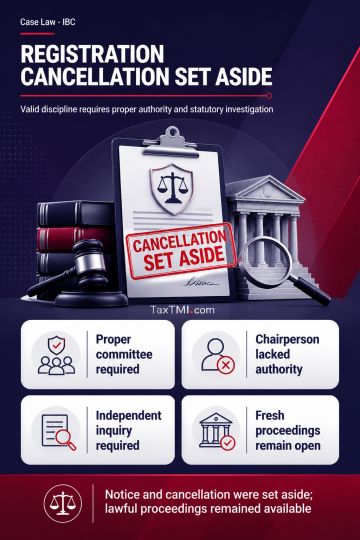
Disciplinary Committee jurisdiction and mandatory investigation requirements invalidated cancellation of an insolvency professional's registration and...
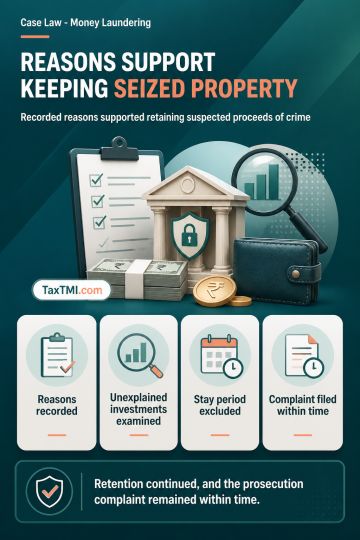
Retention of seized property survives where recorded reasons support proceeds of crime, while stayed investigation periods are excluded from limitatio...
The HC dismissed the writ petition and upheld the validity of Sections 69 and 132 of the Haryana Goods and Services Tax Act, 2017, holding that the challenge to vires of those provisions-alleging lack of legislative competence and contravention of Article 13-does not survive in the present factual matrix, particularly because the contested provisions are analogous to Sections 69 and 132 of the CGST Act. The court concluded that, on the record before it, there is no subsisting forum for sustaining the constitutional attack, and consequently the petitioners' plea for striking down the impugned sections was negatived and the petition was dismissed.
The HC dismissed the writ petition and upheld the validity of Sections 69 and 132 of the Haryana Goods and Services Tax Act, 2017, holding that the challenge to vires of those provisions-alleging lack of legislative competence and contravention of Article 13-does not survive in the present factual matrix, particularly because the contested provisions are analogous to Sections 69 and 132 of the CGST Act. The court concluded that, on the record before it, there is no subsisting forum for sustaining the constitutional attack, and consequently the petitioners' plea for striking down the impugned sections was negatived and the petition was dismissed.
Note: It is a system-generated summary and is for quick reference only.
 TaxTMI
 of 4805






 Join Channel


 TaxTMI