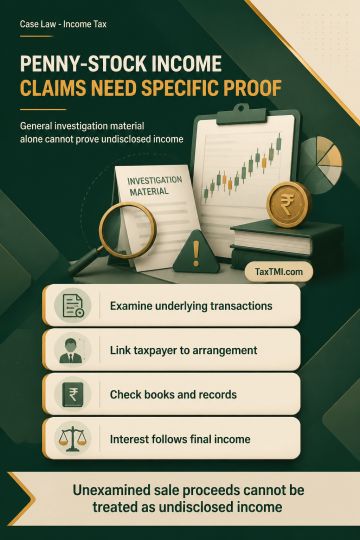
Penny-stock additions require transaction-specific evidence; general investigation material alone cannot establish undisclosed income or accommodation...
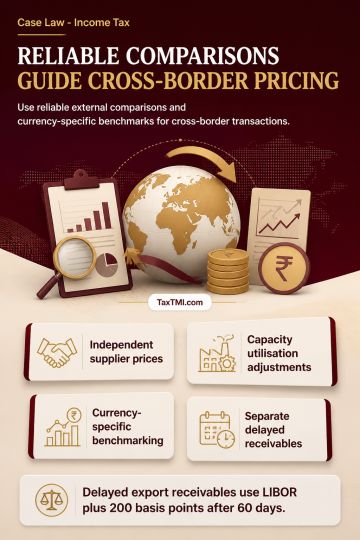
Transfer pricing comparability prioritises reliable external CUPs and foreign-currency LIBOR benchmarks for exports, borrowings and delayed receivable...
Section 153C satisfaction and seized electronic records sustained unexplained-investment addition, subject to proportionate ownership-share verificati...
The HC dismissed Revenue's appeal and upheld the Tribunal's orders: it affirmed that, in light of the SC precedent, the assessee is entitled to deduction under s.80IA(4) for power generated for captive consumption and that the market value may be determined by reference to comparable State Electricity Board rates, yielding a higher deduction where profits are higher. On interest disallowances under s.36(1)(iii) and s.14A, the HC agreed with the Tribunal that the blanket 10% disallowance was impermissible where borrowed funds were not shown to finance dividend-earning investments, and sustained the Tribunal's factual disallowance of Rs.91.80 lakh; it also accepted the consensual Rs.5 lakh disallowance in respect of other administrative expenses.
The HC dismissed Revenue's appeal and upheld the Tribunal's orders: it affirmed that, in light of the SC precedent, the assessee is entitled to deduction under s.80IA(4) for power generated for captive consumption and that the market value may be determined by reference to comparable State Electricity Board rates, yielding a higher deduction where profits are higher. On interest disallowances under s.36(1)(iii) and s.14A, the HC agreed with the Tribunal that the blanket 10% disallowance was impermissible where borrowed funds were not shown to finance dividend-earning investments, and sustained the Tribunal's factual disallowance of Rs.91.80 lakh; it also accepted the consensual Rs.5 lakh disallowance in respect of other administrative expenses.
Note: It is a system-generated summary and is for quick reference only.
 TaxTMI
  TaxTMI
 of 4828







 Join Channel


