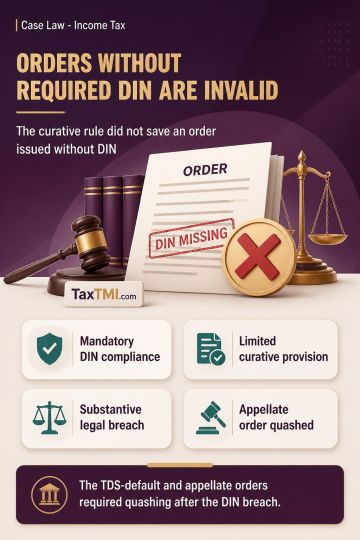
Document Identification Number compliance renders TDS-default orders invalid where mandatory DIN requirements are breached and curative provision does...
CESTAT allowed the appeals and set aside the impugned order. The Tribunal held that the adjudicating authority lacked jurisdiction to re-determine valuation and to recover additional duty or confiscate goods on the basis that imported consignments did not bear a retail sale price (RSP). The obligation to levy additional duty under section 3(1)/3(2) of the Customs Tariff Act must operate within the statutory valuation scheme; post-clearance reassessment cannot be effected absent competence under the Customs Valuation rules or express statutory power to revisit transaction value under the Customs Act. Consequently the recovery of differential duty and consequential confiscation were held unlawful and quashed.
CESTAT allowed the appeals and set aside the impugned order. The Tribunal held that the adjudicating authority lacked jurisdiction to re-determine valuation and to recover additional duty or confiscate goods on the basis that imported consignments did not bear a retail sale price (RSP). The obligation to levy additional duty under section 3(1)/3(2) of the Customs Tariff Act must operate within the statutory valuation scheme; post-clearance reassessment cannot be effected absent competence under the Customs Valuation rules or express statutory power to revisit transaction value under the Customs Act. Consequently the recovery of differential duty and consequential confiscation were held unlawful and quashed.
Note: It is a system-generated summary and is for quick reference only.
 TaxTMI
  TaxTMI
 of 4918