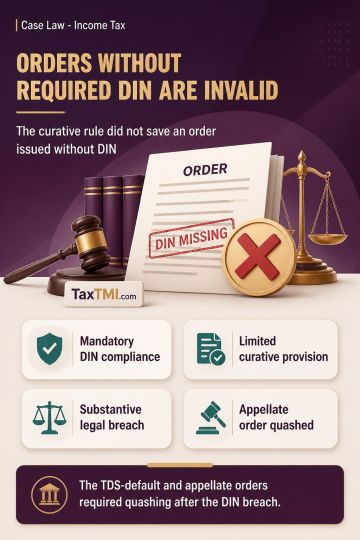
Document Identification Number compliance renders TDS-default orders invalid where mandatory DIN requirements are breached and curative provision does...
The HC dismissed the petitions and upheld the impugned proceedings. It held that Section 6(1) CGST creates automatic cross-empowerment: officers appointed under State/UT GST Acts are deemed proper officers for CGST unless the Government, on Council recommendation, issues a notification imposing conditions. No separate notification is required to confer basic jurisdiction; notifications only operate to subject that empowerment to conditions. Intelligence-based enforcement proceedings (including issuance of SCNs by Central officers) may be initiated even where amount involved is below Rs.1 crore, whereas audit/scrutiny-based proceedings remain with the tax authority to which the assessee is assigned. The permissibility of "bunching" SCNs across years was left open for adjudication; petitions lacked merit.
The HC dismissed the petitions and upheld the impugned proceedings. It held that Section 6(1) CGST creates automatic cross-empowerment: officers appointed under State/UT GST Acts are deemed proper officers for CGST unless the Government, on Council recommendation, issues a notification imposing conditions. No separate notification is required to confer basic jurisdiction; notifications only operate to subject that empowerment to conditions. Intelligence-based enforcement proceedings (including issuance of SCNs by Central officers) may be initiated even where amount involved is below Rs.1 crore, whereas audit/scrutiny-based proceedings remain with the tax authority to which the assessee is assigned. The permissibility of "bunching" SCNs across years was left open for adjudication; petitions lacked merit.
Note: It is a system-generated summary and is for quick reference only.
 TaxTMI
  TaxTMI
 of 4918