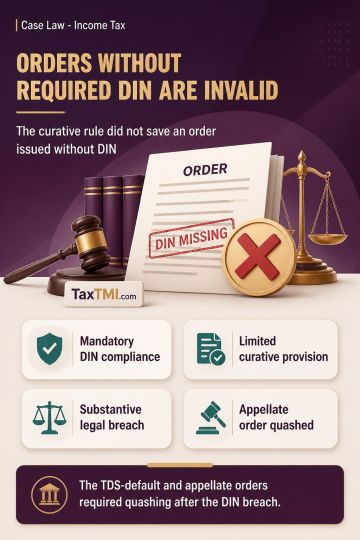
Document Identification Number compliance renders TDS-default orders invalid where mandatory DIN requirements are breached and curative provision does...
The HC affirmed the ITAT's allowance of the assessee's appeal, holding that reassessment framed under s.153A could not be sustained. The tribunal correctly determined that documents retrieved on search-board resolutions, legal notes, valuation reports, deeds of retirement, reconstitution indentures and retirement-cum-release instruments-were business records and not incriminating material. There was no evidence of concealment, nor did the conversion of the partnership to a company constitute a capital asset "transfer" as contemplated by s.2(47). Consequently, consequential reassessment proceedings lacked jurisdictional and substantive basis and were quashed, with the assessment restored in favour of the assessee.
The HC affirmed the ITAT's allowance of the assessee's appeal, holding that reassessment framed under s.153A could not be sustained. The tribunal correctly determined that documents retrieved on search-board resolutions, legal notes, valuation reports, deeds of retirement, reconstitution indentures and retirement-cum-release instruments-were business records and not incriminating material. There was no evidence of concealment, nor did the conversion of the partnership to a company constitute a capital asset "transfer" as contemplated by s.2(47). Consequently, consequential reassessment proceedings lacked jurisdictional and substantive basis and were quashed, with the assessment restored in favour of the assessee.
Note: It is a system-generated summary and is for quick reference only.
 TaxTMI
  TaxTMI
 of 4918