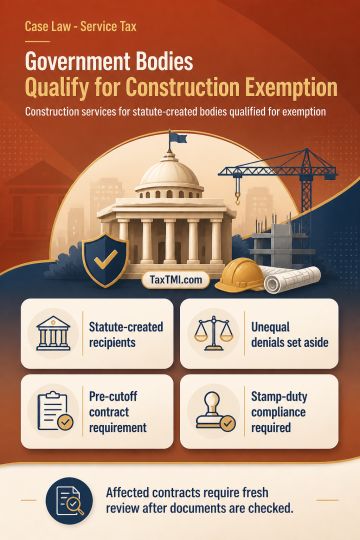
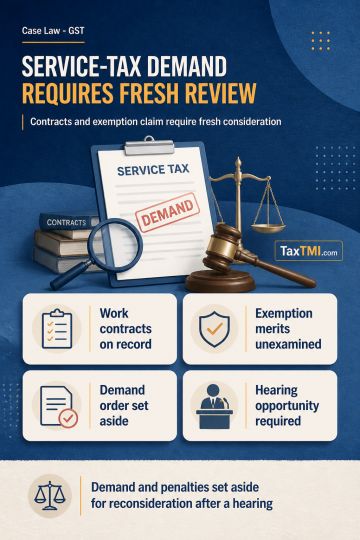
Governmental authority status supports construction-service exemption, while pre-cutoff contract and stamp-duty compliance requires verification on re...
Automated Free Sale and Commerce Certificates enable paperless processing while retaining risk-based manual verification for selected exporter applica...
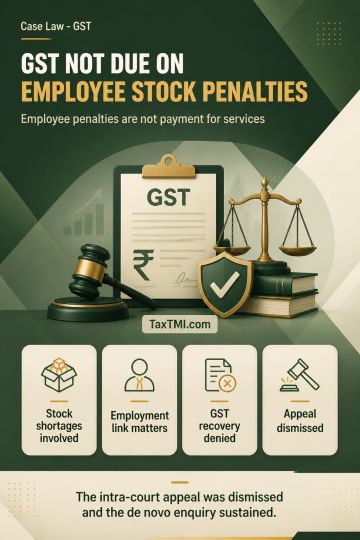
Employee stock-shortage penalties do not constitute consideration for services, preventing GST collection under Schedule II in employment relationship...
The HC allowed the application to transfer and revive insolvency proceedings under the IBC, directing adjudication by the NCLT under Section 7 pursuant to the discretionary jurisdiction in Section 434(1)(c) of the 2013 Act. The Court found the winding-up petition had not reached an irreversible stage, the revival scheme sanctioned earlier had failed and was set aside, and numerous creditor claims and recurring preservation expenses threatened the common pool and creditor recoveries. In view of the multiplicity of creditors and public interest, the HC ordered continuation of proceedings as CIRP before the NCLT, enabling appointment of an interim resolution professional and prosecution of insolvency processes under the IBC.
The HC allowed the application to transfer and revive insolvency proceedings under the IBC, directing adjudication by the NCLT under Section 7 pursuant to the discretionary jurisdiction in Section 434(1)(c) of the 2013 Act. The Court found the winding-up petition had not reached an irreversible stage, the revival scheme sanctioned earlier had failed and was set aside, and numerous creditor claims and recurring preservation expenses threatened the common pool and creditor recoveries. In view of the multiplicity of creditors and public interest, the HC ordered continuation of proceedings as CIRP before the NCLT, enabling appointment of an interim resolution professional and prosecution of insolvency processes under the IBC.
Note: It is a system-generated summary and is for quick reference only.
 TaxTMI
  TaxTMI
 of 4828







 Join Channel


