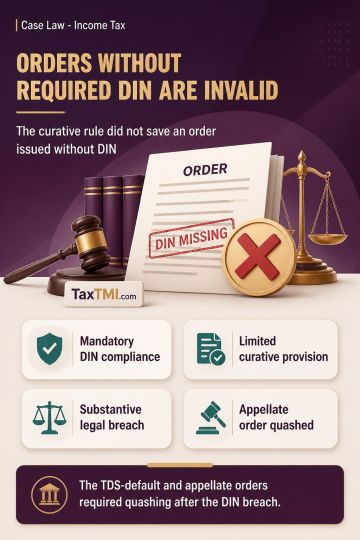
Document Identification Number compliance renders TDS-default orders invalid where mandatory DIN requirements are breached and curative provision does...
ITAT held that the recording of satisfaction by the AO under section 153C was legally deficient and failed to establish jurisdiction to initiate proceedings. The satisfaction note did not identify specific incriminating documents as belonging to the assessee, did not link seized material to the relevant assessment year, nor quantified the quantum relied upon; it was a consolidated, vague recording lacking year-wise correlation. Consequent to this inadequacy, the tribunal concluded that proceedings under section 153C could not be sustained and allowed the assessee's appeal, setting aside the impugned assessment initiated on the basis of the defective satisfaction note.
ITAT held that the recording of satisfaction by the AO under section 153C was legally deficient and failed to establish jurisdiction to initiate proceedings. The satisfaction note did not identify specific incriminating documents as belonging to the assessee, did not link seized material to the relevant assessment year, nor quantified the quantum relied upon; it was a consolidated, vague recording lacking year-wise correlation. Consequent to this inadequacy, the tribunal concluded that proceedings under section 153C could not be sustained and allowed the assessee's appeal, setting aside the impugned assessment initiated on the basis of the defective satisfaction note.
Note: It is a system-generated summary and is for quick reference only.
 TaxTMI
  TaxTMI
 of 4918