Specified development authority income receives retrospective tax exemption, subject to non-commercial activity, unchanged income sources, and return-...
Unified Brand India framework introduces voluntary Trust Mark certification and funding support for export branding, packaging and global promotional ...
Origin Declaration authentication governs preferential tariff claims under India-UK CETA, requiring a validated reference number before import clearan...
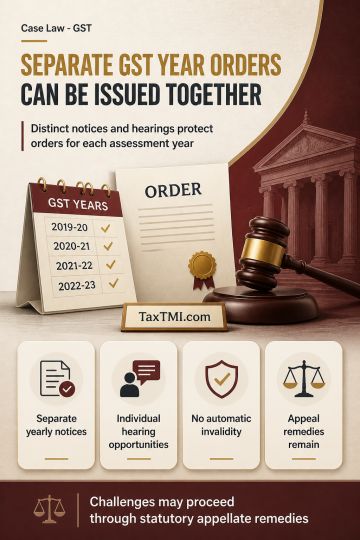
Separate assessment orders for different years remain valid when distinct notices and hearing opportunities prevent prejudice from combined proceeding...
Defined public benefit can retain charitable character; registration renewal requires examining genuine activities and legal compliance, not surplus a...
Capital reduction is distinct from share buy-back, preventing buy-back tax; restructuring interest and related business deductions also survive scruti...
HC held that income derived from production and sale of hybrid seeds qualified as agricultural income within s.10(1) because the appellant, although not directly tilling land, exercised supervision, technical guidance, contractual control and bore risk and expense of cultivation carried out by farmers to produce parent and hybrid seeds. The Court concluded the operations constituted agricultural activity carried out through contractors, establishing a direct nexus with land. Accordingly, the HC allowed the appellant's appeal, treating the receipts as exempt agricultural income and reversing the characterization that disallowed exemption, while recognising the legitimacy of production-by-contract and the appellant's effective control over cultivation.
HC held that income derived from production and sale of hybrid seeds qualified as agricultural income within s.10(1) because the appellant, although not directly tilling land, exercised supervision, technical guidance, contractual control and bore risk and expense of cultivation carried out by farmers to produce parent and hybrid seeds. The Court concluded the operations constituted agricultural activity carried out through contractors, establishing a direct nexus with land. Accordingly, the HC allowed the appellant's appeal, treating the receipts as exempt agricultural income and reversing the characterization that disallowed exemption, while recognising the legitimacy of production-by-contract and the appellant's effective control over cultivation.
Note: It is a system-generated summary and is for quick reference only.
 TaxTMI
 of 4805
















 Join Channel


 TaxTMI
