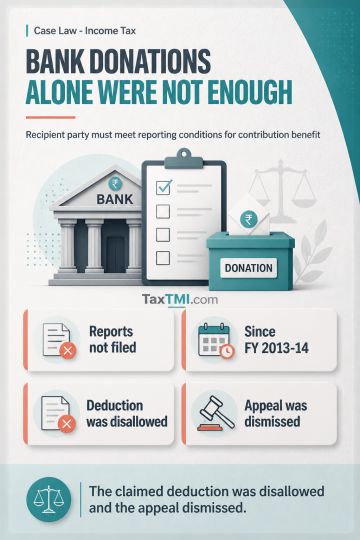
Political contribution deductions require recipient party compliance with contribution-reporting conditions; banking-channel donations alone do not qu...
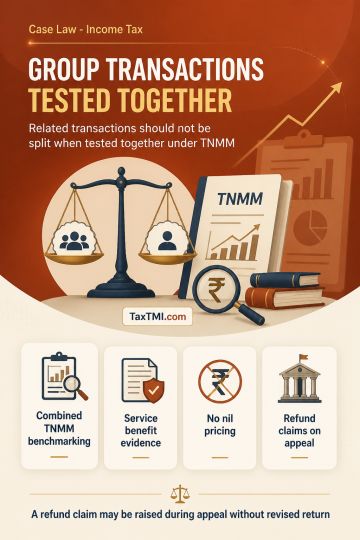
Aggregation under TNMM prevents selective testing of intra-group services without comparable uncontrolled transactions, while appellate additional cla...
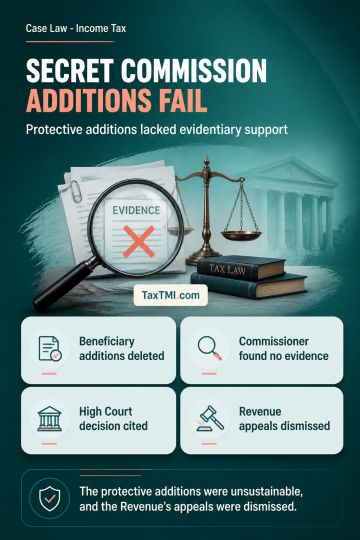
Protective assessment cannot duplicate identical receipts under competing characterisations; remote services did not establish a taxable permanent est...
Current account treatment of overseas tournament services removed most FEMA findings, but excess EEFC remittance and delayed repatriation remained bre...
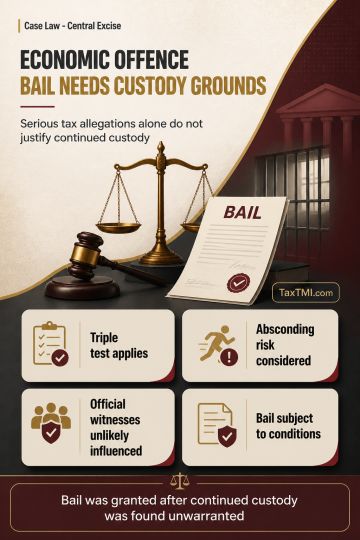
Modification of bail conditions remains available through inherent jurisdiction where onerous deposits undermine justice and cannot recover disputed d...
Merchant banker regulation consolidates registration, governance, capital, reporting, outsourcing and investor-protection requirements under an update...
HC held that income derived from production and sale of hybrid seeds qualified as agricultural income within s.10(1) because the appellant, although not directly tilling land, exercised supervision, technical guidance, contractual control and bore risk and expense of cultivation carried out by farmers to produce parent and hybrid seeds. The Court concluded the operations constituted agricultural activity carried out through contractors, establishing a direct nexus with land. Accordingly, the HC allowed the appellant's appeal, treating the receipts as exempt agricultural income and reversing the characterization that disallowed exemption, while recognising the legitimacy of production-by-contract and the appellant's effective control over cultivation.
HC held that income derived from production and sale of hybrid seeds qualified as agricultural income within s.10(1) because the appellant, although not directly tilling land, exercised supervision, technical guidance, contractual control and bore risk and expense of cultivation carried out by farmers to produce parent and hybrid seeds. The Court concluded the operations constituted agricultural activity carried out through contractors, establishing a direct nexus with land. Accordingly, the HC allowed the appellant's appeal, treating the receipts as exempt agricultural income and reversing the characterization that disallowed exemption, while recognising the legitimacy of production-by-contract and the appellant's effective control over cultivation.
Note: It is a system-generated summary and is for quick reference only.
 TaxTMI
 of 4796













 Join Channel


 TaxTMI