Prolonged sterilisation of development rights supports capital-gains treatment, while business-income disallowances cannot govern capital-gains comput...
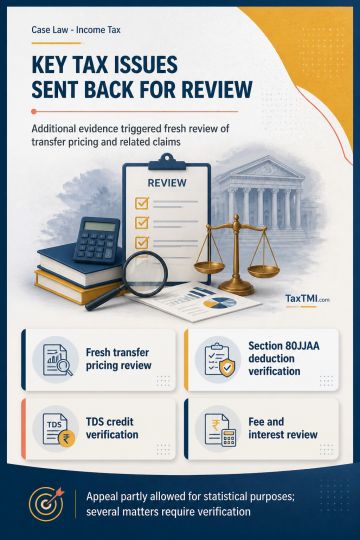
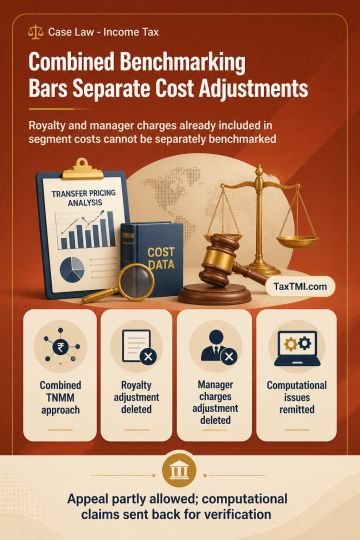
Additional evidence in transfer pricing dispute leads to fresh examination, while tax deductions, TDS credit, fee and refund interest require verifica...
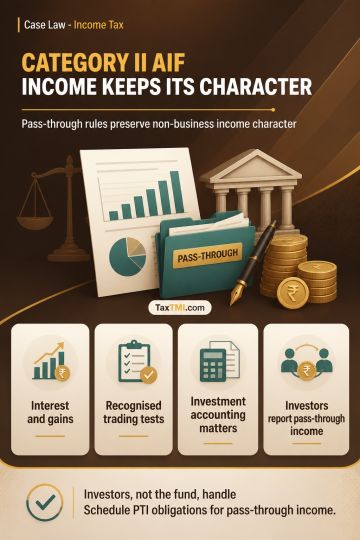
Category II AIF pass-through taxation preserves non-business income character; investment receipts cannot be reclassified without applying recognised ...
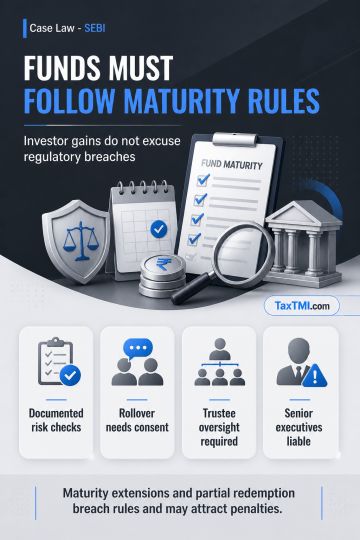
Mutual fund maturity rules require proper rollover, redemption, disclosure, and due diligence; investor gains cannot excuse regulatory breaches or pen...
Threshold exemption excludes exempt services, while stamp-paper purchases avoid reverse charge; consequential service tax penalties were also set asid...
The ITAT allowed the appeal, holding the assessing officer's...
Adhoc 30% disallowance of referral commissions set aside; payments treated as sales promotion, not insurance commissions under s.194D; s.40(a)(ia) relief
Contents
Summary
Note
Bookmark
Share
✓ Copied successfully !
Print
Print Options
For full text, please login
Login to TaxTMI
Verification Pending
The Email Id has not been verified. Click on the link we have sent on
The ITAT allowed the appeal, holding the assessing officer's adhoc 30% disallowance of referral commissions unsustainable for lack of evidentiary basis and rational nexus; documentary evidence and statutory summons responses established payment to 14 individuals. Further, the Tribunal held payments constituted sales promotion/referral expenses and were not insurance commissions within section 194D, as the payees were not insurer-appointed agents and no principal-agent relationship with insurers existed. At most the payments could fall under sections 194H or 194C, but deduction obligations did not arise given the payer's status and receipts below statutory thresholds. Consequently, disallowances under section 40(a)(ia) were set aside.
The ITAT allowed the appeal, holding the assessing officer's adhoc 30% disallowance of referral commissions unsustainable for lack of evidentiary basis and rational nexus; documentary evidence and statutory summons responses established payment to 14 individuals. Further, the Tribunal held payments constituted sales promotion/referral expenses and were not insurance commissions within section 194D, as the payees were not insurer-appointed agents and no principal-agent relationship with insurers existed. At most the payments could fall under sections 194H or 194C, but deduction obligations did not arise given the payer's status and receipts below statutory thresholds. Consequently, disallowances under section 40(a)(ia) were set aside.
Note: It is a system-generated summary and is for quick reference only.
 TaxTMI
 of 4805







 Join Channel


 TaxTMI
