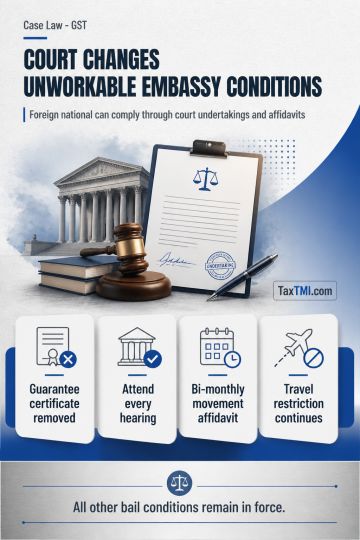
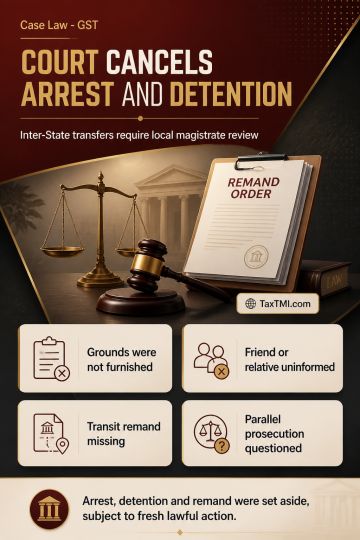
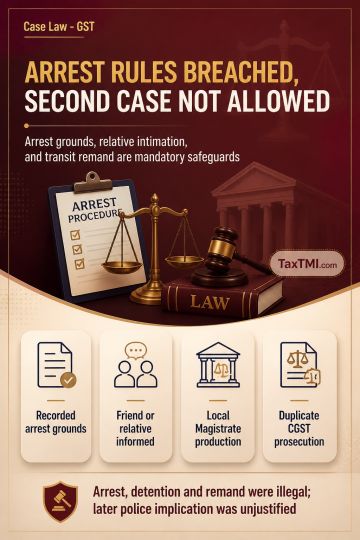
Arrest safeguards and transit remand requirements invalidated detention following inter-State transfer without communicated grounds or magistrate auth...
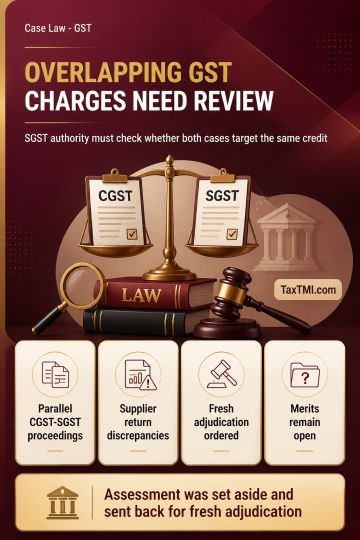
Arrest safeguards require disclosed grounds, relative intimation and transit remand, while duplicate prosecution under the CGST framework is unsustain...
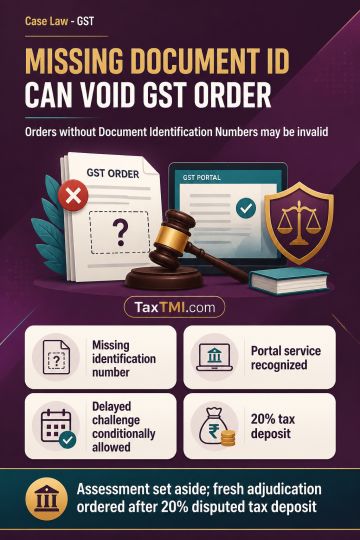
Document Identification Number defects can invalidate GST assessments, with delayed challenges entertained conditionally where patent irregularities e...
Windmill commissioning evidence supported higher depreciation where grid connection and electricity generation proved operational use before the relev...
The ITAT allowed the appeal, holding the assessing officer's...
Adhoc 30% disallowance of referral commissions set aside; payments treated as sales promotion, not insurance commissions under s.194D; s.40(a)(ia) relief
Contents
Summary
Note
Bookmark
Share
✓ Copied successfully !
Print
Print Options
For full text, please login
Login to TaxTMI
Verification Pending
The Email Id has not been verified. Click on the link we have sent on
The ITAT allowed the appeal, holding the assessing officer's adhoc 30% disallowance of referral commissions unsustainable for lack of evidentiary basis and rational nexus; documentary evidence and statutory summons responses established payment to 14 individuals. Further, the Tribunal held payments constituted sales promotion/referral expenses and were not insurance commissions within section 194D, as the payees were not insurer-appointed agents and no principal-agent relationship with insurers existed. At most the payments could fall under sections 194H or 194C, but deduction obligations did not arise given the payer's status and receipts below statutory thresholds. Consequently, disallowances under section 40(a)(ia) were set aside.
The ITAT allowed the appeal, holding the assessing officer's adhoc 30% disallowance of referral commissions unsustainable for lack of evidentiary basis and rational nexus; documentary evidence and statutory summons responses established payment to 14 individuals. Further, the Tribunal held payments constituted sales promotion/referral expenses and were not insurance commissions within section 194D, as the payees were not insurer-appointed agents and no principal-agent relationship with insurers existed. At most the payments could fall under sections 194H or 194C, but deduction obligations did not arise given the payer's status and receipts below statutory thresholds. Consequently, disallowances under section 40(a)(ia) were set aside.
Note: It is a system-generated summary and is for quick reference only.
 TaxTMI
 of 4800






 Join Channel


 TaxTMI
