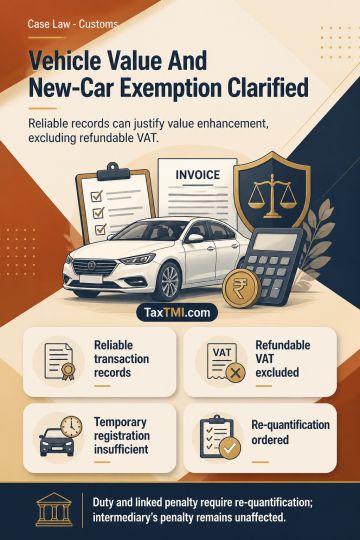
Transaction value rejection requires reliable corroboration; refundable VAT is excluded and temporary registration does not defeat new-vehicle exempti...
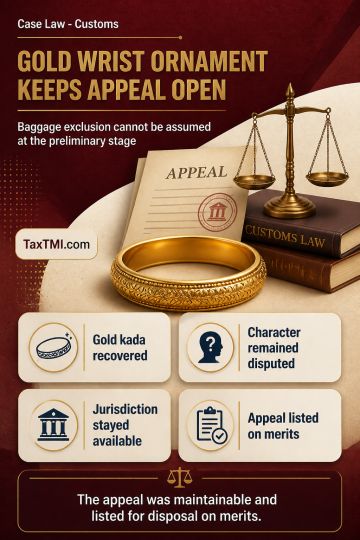
Appellate jurisdiction remains available where a wrist-worn gold ornament cannot conclusively be characterised as imported baggage at the preliminary ...
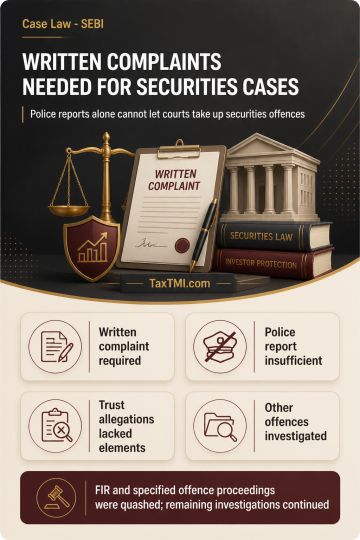
Written complaint requirement bars cognizance on police reports for securities offences, while unsupported breach of trust and cheating allegations fa...
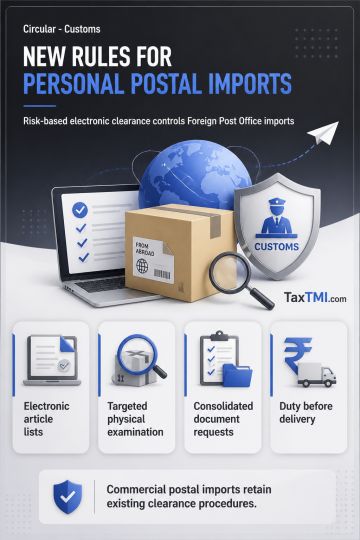
Risk-based postal import clearance standardises electronic assessment, document requests, duty realisation and delivery controls at Foreign Post Offic...
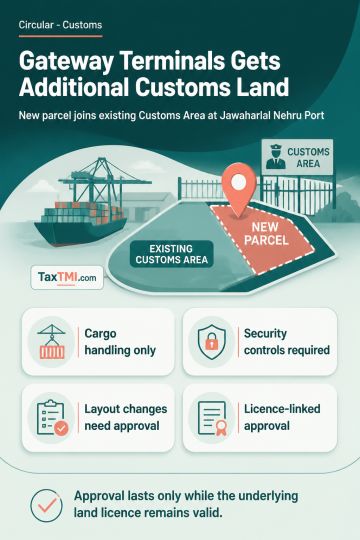
Customs Cargo Service Provider appointment extends custodianship to additional terminal land, subject to cargo-control, security and licence condition...
The ITAT allowed the appeal, holding the assessing officer's...
Adhoc 30% disallowance of referral commissions set aside; payments treated as sales promotion, not insurance commissions under s.194D; s.40(a)(ia) relief
Contents
Summary
Note
Bookmark
Share
✓ Copied successfully !
Print
Print Options
For full text, please login
Login to TaxTMI
Verification Pending
The Email Id has not been verified. Click on the link we have sent on
The ITAT allowed the appeal, holding the assessing officer's adhoc 30% disallowance of referral commissions unsustainable for lack of evidentiary basis and rational nexus; documentary evidence and statutory summons responses established payment to 14 individuals. Further, the Tribunal held payments constituted sales promotion/referral expenses and were not insurance commissions within section 194D, as the payees were not insurer-appointed agents and no principal-agent relationship with insurers existed. At most the payments could fall under sections 194H or 194C, but deduction obligations did not arise given the payer's status and receipts below statutory thresholds. Consequently, disallowances under section 40(a)(ia) were set aside.
The ITAT allowed the appeal, holding the assessing officer's adhoc 30% disallowance of referral commissions unsustainable for lack of evidentiary basis and rational nexus; documentary evidence and statutory summons responses established payment to 14 individuals. Further, the Tribunal held payments constituted sales promotion/referral expenses and were not insurance commissions within section 194D, as the payees were not insurer-appointed agents and no principal-agent relationship with insurers existed. At most the payments could fall under sections 194H or 194C, but deduction obligations did not arise given the payer's status and receipts below statutory thresholds. Consequently, disallowances under section 40(a)(ia) were set aside.
Note: It is a system-generated summary and is for quick reference only.
 TaxTMI
 of 4792




 Join Channel


 TaxTMI