Prolonged sterilisation of development rights supports capital-gains treatment, while business-income disallowances cannot govern capital-gains comput...
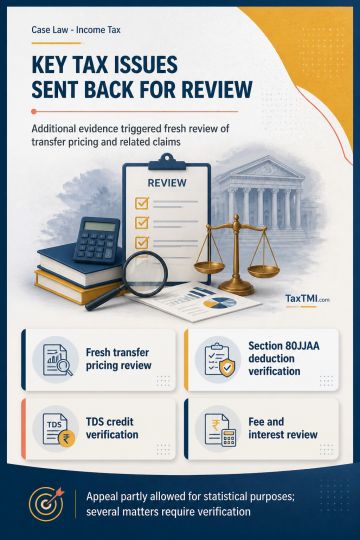
Additional evidence in transfer pricing dispute leads to fresh examination, while tax deductions, TDS credit, fee and refund interest require verifica...
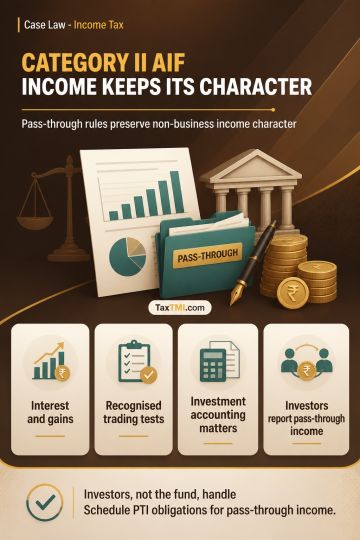
Category II AIF pass-through taxation preserves non-business income character; investment receipts cannot be reclassified without applying recognised ...
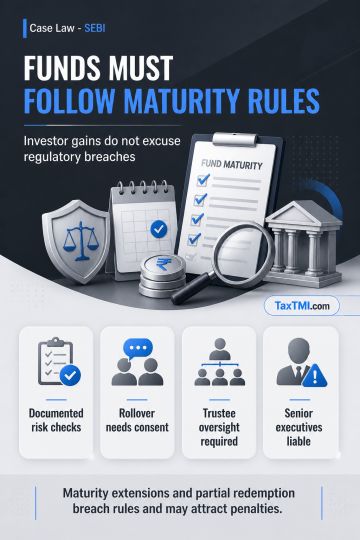
Mutual fund maturity rules require proper rollover, redemption, disclosure, and due diligence; investor gains cannot excuse regulatory breaches or pen...
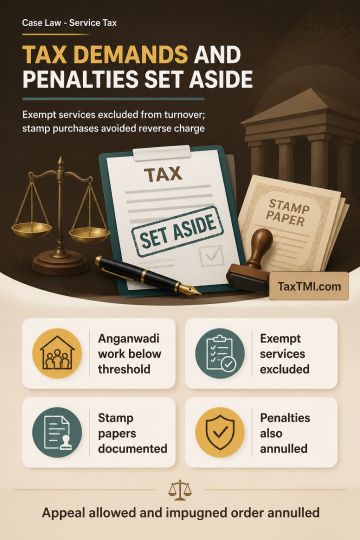
Threshold exemption excludes exempt services, while stamp-paper purchases avoid reverse charge; consequential service tax penalties were also set asid...
The ITAT affirmed the CIT(A)'s decision and dismissed all Revenue grounds, holding the impugned final assessment order vitiated. The AO's initiation under s.153C was invalid because a single consolidated satisfaction note for multiple distinct assessees and assessment years was recorded instead of distinct, year-wise satisfactions as mandated; seized material was not analyzed qua each assessment year. Applying the principle that incriminating material must be shown to pertain to a particular year, the Tribunal found non-compliance with ss.124-127 and s.153C. Further, because the assessee (a foreign non-resident and an "eligible assessee" under s.144C(15)(b)) did not receive a draft assessment as required by s.144C(1), the final order was vitiated and set aside.
The ITAT affirmed the CIT(A)'s decision and dismissed all Revenue grounds, holding the impugned final assessment order vitiated. The AO's initiation under s.153C was invalid because a single consolidated satisfaction note for multiple distinct assessees and assessment years was recorded instead of distinct, year-wise satisfactions as mandated; seized material was not analyzed qua each assessment year. Applying the principle that incriminating material must be shown to pertain to a particular year, the Tribunal found non-compliance with ss.124-127 and s.153C. Further, because the assessee (a foreign non-resident and an "eligible assessee" under s.144C(15)(b)) did not receive a draft assessment as required by s.144C(1), the final order was vitiated and set aside.
Note: It is a system-generated summary and is for quick reference only.
 TaxTMI
 of 4805







 Join Channel


 TaxTMI
