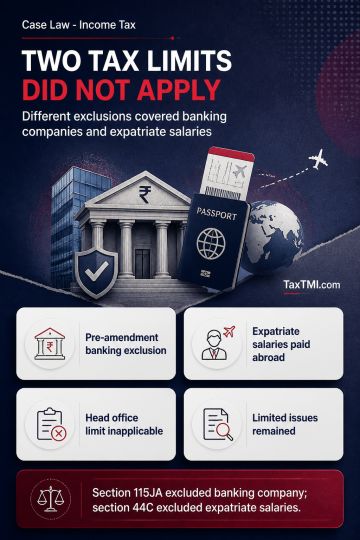
Minimum alternate tax exclusions for pre-amendment banking companies and expatriate Indian branch salaries remain outside head office expenditure limi...
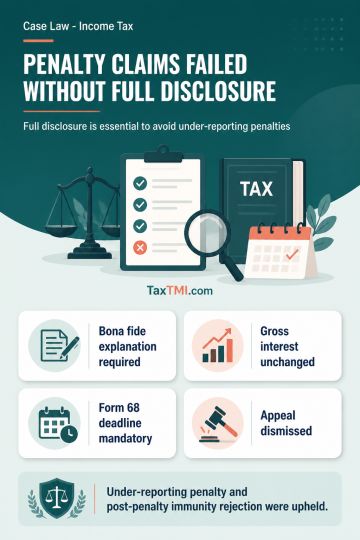
Bona fide disclosure requirements govern under-reporting penalties, and post-penalty immunity applications cannot secure available statutory protectio...
The ITAT affirmed the CIT(A)'s decision and dismissed all Revenue grounds, holding the impugned final assessment order vitiated. The AO's initiation under s.153C was invalid because a single consolidated satisfaction note for multiple distinct assessees and assessment years was recorded instead of distinct, year-wise satisfactions as mandated; seized material was not analyzed qua each assessment year. Applying the principle that incriminating material must be shown to pertain to a particular year, the Tribunal found non-compliance with ss.124-127 and s.153C. Further, because the assessee (a foreign non-resident and an "eligible assessee" under s.144C(15)(b)) did not receive a draft assessment as required by s.144C(1), the final order was vitiated and set aside.
The ITAT affirmed the CIT(A)'s decision and dismissed all Revenue grounds, holding the impugned final assessment order vitiated. The AO's initiation under s.153C was invalid because a single consolidated satisfaction note for multiple distinct assessees and assessment years was recorded instead of distinct, year-wise satisfactions as mandated; seized material was not analyzed qua each assessment year. Applying the principle that incriminating material must be shown to pertain to a particular year, the Tribunal found non-compliance with ss.124-127 and s.153C. Further, because the assessee (a foreign non-resident and an "eligible assessee" under s.144C(15)(b)) did not receive a draft assessment as required by s.144C(1), the final order was vitiated and set aside.
Note: It is a system-generated summary and is for quick reference only.
 TaxTMI
 of 4803






 Join Channel


 TaxTMI