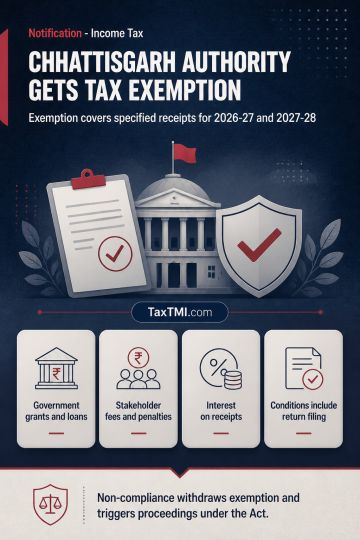
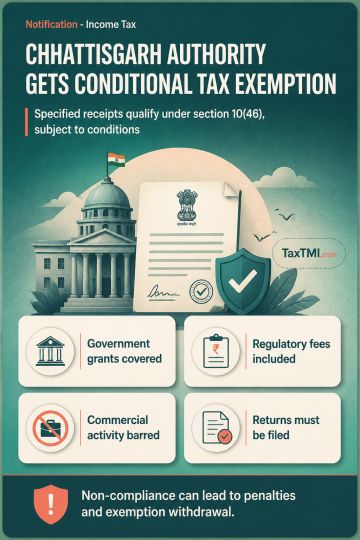
Specified regulatory authority income receives conditional tax exemption, subject to non-commercial activity, unchanged income character, and return f...
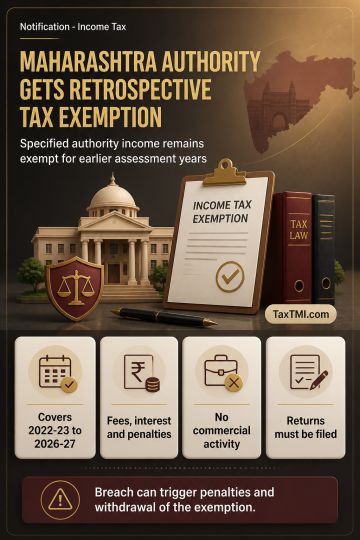
Tax exemption for regulatory authority income applies retrospectively, subject to non-commercial activity, unchanged income sources, and return-filing...
Input tax credit conditions remain constitutionally valid, with eligible recipient claims considered under GST circulars and retrospective filing dead...
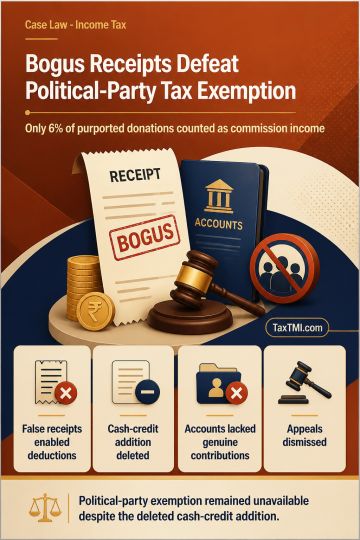
Bogus donation receipts justified commission income assessment and defeated political-party tax exemption for inaccurate accounts and reporting failur...
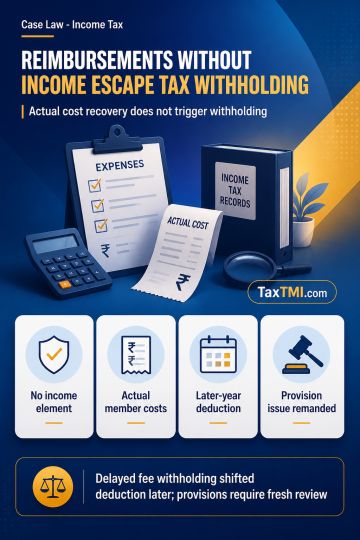
Pure reimbursement without income element escapes tax withholding, while delayed withholding and unsupported provisions face deferred or renewed scrut...
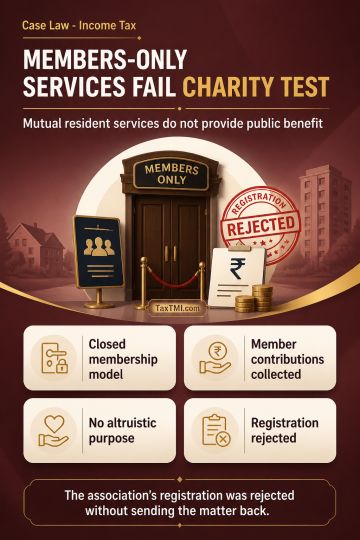
Public benefit requirement defeats charitable registration where residents' association services are reciprocal, member-only facilities governed by mu...
The ITAT affirmed the CIT(A)'s decision and dismissed all Revenue grounds, holding the impugned final assessment order vitiated. The AO's initiation under s.153C was invalid because a single consolidated satisfaction note for multiple distinct assessees and assessment years was recorded instead of distinct, year-wise satisfactions as mandated; seized material was not analyzed qua each assessment year. Applying the principle that incriminating material must be shown to pertain to a particular year, the Tribunal found non-compliance with ss.124-127 and s.153C. Further, because the assessee (a foreign non-resident and an "eligible assessee" under s.144C(15)(b)) did not receive a draft assessment as required by s.144C(1), the final order was vitiated and set aside.
The ITAT affirmed the CIT(A)'s decision and dismissed all Revenue grounds, holding the impugned final assessment order vitiated. The AO's initiation under s.153C was invalid because a single consolidated satisfaction note for multiple distinct assessees and assessment years was recorded instead of distinct, year-wise satisfactions as mandated; seized material was not analyzed qua each assessment year. Applying the principle that incriminating material must be shown to pertain to a particular year, the Tribunal found non-compliance with ss.124-127 and s.153C. Further, because the assessee (a foreign non-resident and an "eligible assessee" under s.144C(15)(b)) did not receive a draft assessment as required by s.144C(1), the final order was vitiated and set aside.
Note: It is a system-generated summary and is for quick reference only.
 TaxTMI
 of 4801



 Join Channel


 TaxTMI
