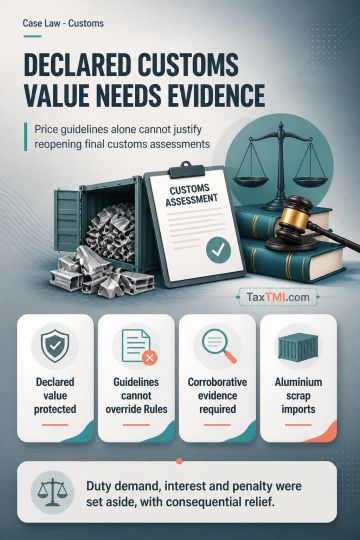
Transaction value cannot be rejected solely on non-statutory valuation guidelines without corroborative evidence supporting reassessment of final cust...
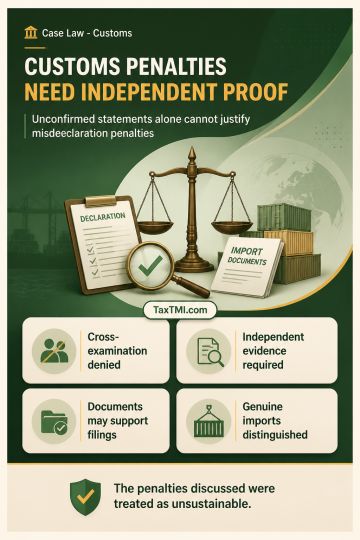
Cross-examination rights and corroborated evidence limit customs penalties for misdeclaration in genuine import transactions involving documented clea...
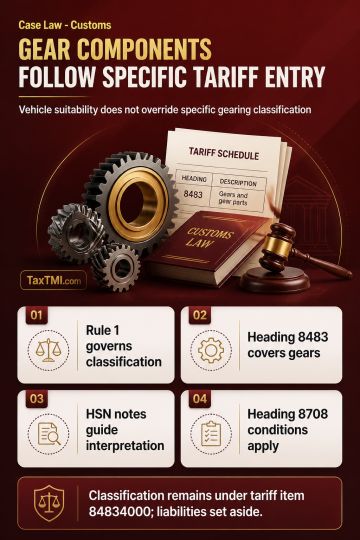
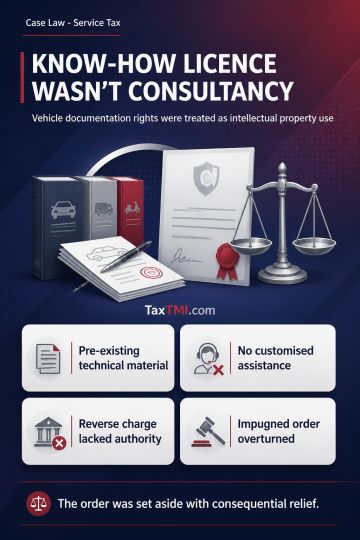
Tariff classification of vehicle gear components follows the specific gearing entry, displacing motor-vehicle parts classification and related liabili...
Necessary-party requirements limit impleadment of independent entities, while deferred consideration does not create an appealable adverse determinati...
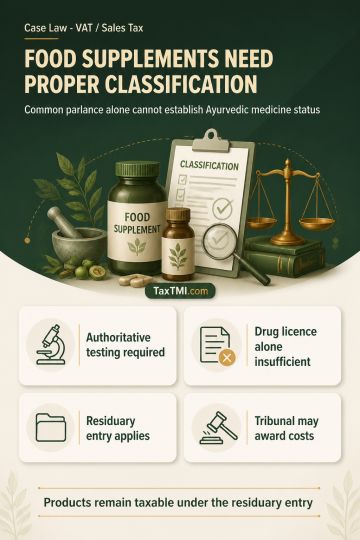
Food supplement classification requires common parlance and authoritative tests, preventing treatment as proprietary Ayurvedic medicines without suppo...
The ITAT affirmed the CIT(A)'s decision and dismissed all Revenue grounds, holding the impugned final assessment order vitiated. The AO's initiation under s.153C was invalid because a single consolidated satisfaction note for multiple distinct assessees and assessment years was recorded instead of distinct, year-wise satisfactions as mandated; seized material was not analyzed qua each assessment year. Applying the principle that incriminating material must be shown to pertain to a particular year, the Tribunal found non-compliance with ss.124-127 and s.153C. Further, because the assessee (a foreign non-resident and an "eligible assessee" under s.144C(15)(b)) did not receive a draft assessment as required by s.144C(1), the final order was vitiated and set aside.
The ITAT affirmed the CIT(A)'s decision and dismissed all Revenue grounds, holding the impugned final assessment order vitiated. The AO's initiation under s.153C was invalid because a single consolidated satisfaction note for multiple distinct assessees and assessment years was recorded instead of distinct, year-wise satisfactions as mandated; seized material was not analyzed qua each assessment year. Applying the principle that incriminating material must be shown to pertain to a particular year, the Tribunal found non-compliance with ss.124-127 and s.153C. Further, because the assessee (a foreign non-resident and an "eligible assessee" under s.144C(15)(b)) did not receive a draft assessment as required by s.144C(1), the final order was vitiated and set aside.
Note: It is a system-generated summary and is for quick reference only.
 TaxTMI
 of 4801








 Join Channel


 TaxTMI
