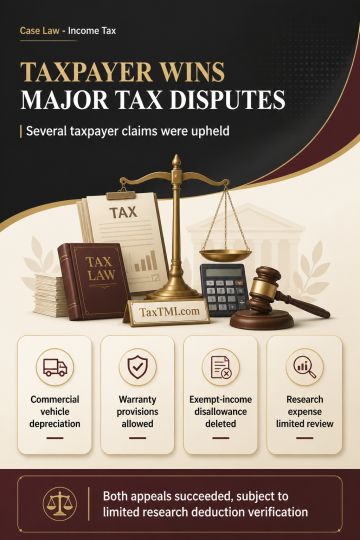
Commercial vehicle depreciation, scientifically determined warranty provisions and exempt-income disallowances were resolved in favour of the taxpayer...
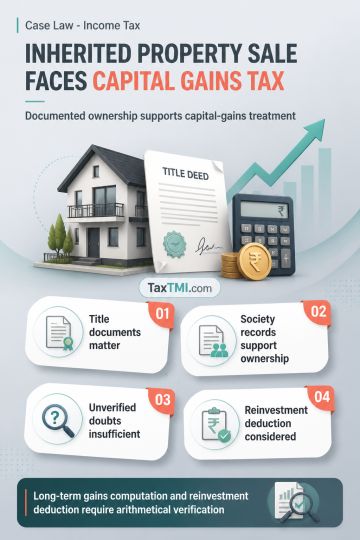
Inherited property sale proceeds require capital-gains treatment where ownership is supported by evidence, not suspicion or unverified signature doubt...
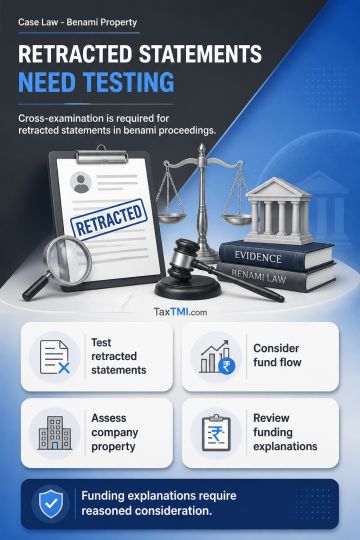
Cross-examination of retracted statements is essential where foundational evidence supports a benami allegation and documented funding explanations re...
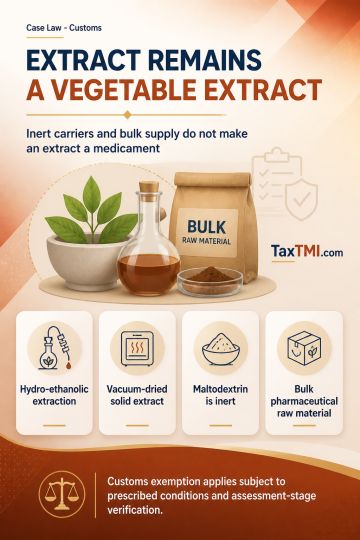
Capital-goods exemption covers plant-modernisation accessories, while the import restriction applies only to earlier capital-goods components and spar...
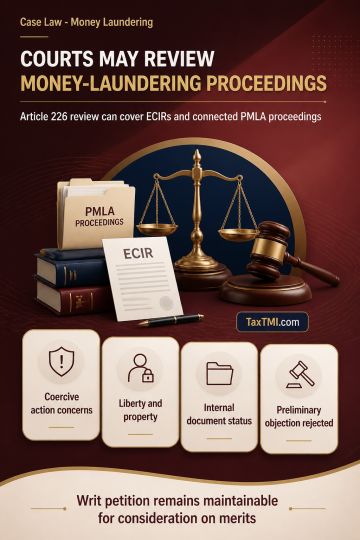
Constitutional judicial review permits challenges to ECIRs and connected money-laundering proceedings where coercive action affects fundamental intere...
The ITAT affirmed the CIT(A)'s decision and dismissed all Revenue grounds, holding the impugned final assessment order vitiated. The AO's initiation under s.153C was invalid because a single consolidated satisfaction note for multiple distinct assessees and assessment years was recorded instead of distinct, year-wise satisfactions as mandated; seized material was not analyzed qua each assessment year. Applying the principle that incriminating material must be shown to pertain to a particular year, the Tribunal found non-compliance with ss.124-127 and s.153C. Further, because the assessee (a foreign non-resident and an "eligible assessee" under s.144C(15)(b)) did not receive a draft assessment as required by s.144C(1), the final order was vitiated and set aside.
The ITAT affirmed the CIT(A)'s decision and dismissed all Revenue grounds, holding the impugned final assessment order vitiated. The AO's initiation under s.153C was invalid because a single consolidated satisfaction note for multiple distinct assessees and assessment years was recorded instead of distinct, year-wise satisfactions as mandated; seized material was not analyzed qua each assessment year. Applying the principle that incriminating material must be shown to pertain to a particular year, the Tribunal found non-compliance with ss.124-127 and s.153C. Further, because the assessee (a foreign non-resident and an "eligible assessee" under s.144C(15)(b)) did not receive a draft assessment as required by s.144C(1), the final order was vitiated and set aside.
Note: It is a system-generated summary and is for quick reference only.
 TaxTMI
 of 4796






 Join Channel


 TaxTMI
