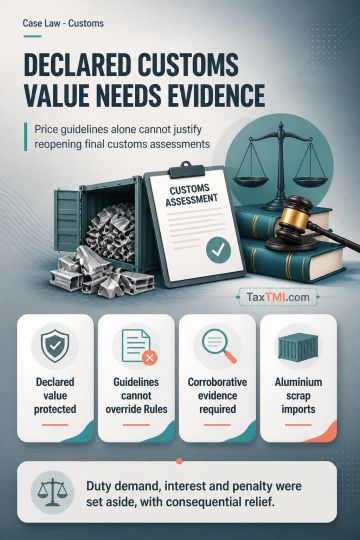
Transaction value cannot be rejected solely on non-statutory valuation guidelines without corroborative evidence supporting reassessment of final cust...
Cross-examination rights and corroborated evidence limit customs penalties for misdeclaration in genuine import transactions involving documented clea...
Tariff classification of vehicle gear components follows the specific gearing entry, displacing motor-vehicle parts classification and related liabili...
Necessary-party requirements limit impleadment of independent entities, while deferred consideration does not create an appealable adverse determinati...
Food supplement classification requires common parlance and authoritative tests, preventing treatment as proprietary Ayurvedic medicines without suppo...
The ITAT affirmed the appellate authority's decision, holding that the taxpayer's receipts from international carriage of passengers and cargo, including services performed entirely by third-party carriers pursuant to code-sharing arrangements, constitute "operation of aircraft in international traffic" within the meaning of Article 8 of the India-US DTAA and are exempt from Indian taxation. The Tribunal applied the coordinate-bench precedent for the relevant assessment year, finding no material change in facts or law and no persuasive revenue evidence to the contrary. Because the entire receipts were held exempt under Article 8, subsidiary contentions regarding Article 8(2)(a) and Article 8(4) were declared academic.
The ITAT affirmed the appellate authority's decision, holding that the taxpayer's receipts from international carriage of passengers and cargo, including services performed entirely by third-party carriers pursuant to code-sharing arrangements, constitute "operation of aircraft in international traffic" within the meaning of Article 8 of the India-US DTAA and are exempt from Indian taxation. The Tribunal applied the coordinate-bench precedent for the relevant assessment year, finding no material change in facts or law and no persuasive revenue evidence to the contrary. Because the entire receipts were held exempt under Article 8, subsidiary contentions regarding Article 8(2)(a) and Article 8(4) were declared academic.
Note: It is a system-generated summary and is for quick reference only.
 TaxTMI
 of 4801






















 Join Channel


 TaxTMI
