Dispute Resolution Panel objections must reach both prescribed forums; otherwise assessment may proceed and statutory appeal remains the proper remedy...
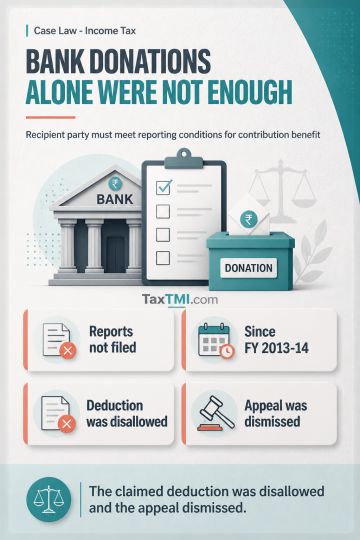
Political contribution deductions require recipient party compliance with contribution-reporting conditions; banking-channel donations alone do not qu...
Aggregation under TNMM prevents selective testing of intra-group services without comparable uncontrolled transactions, while appellate additional cla...
Protective assessment cannot duplicate identical receipts under competing characterisations; remote services did not establish a taxable permanent est...
Current account treatment of overseas tournament services removed most FEMA findings, but excess EEFC remittance and delayed repatriation remained bre...
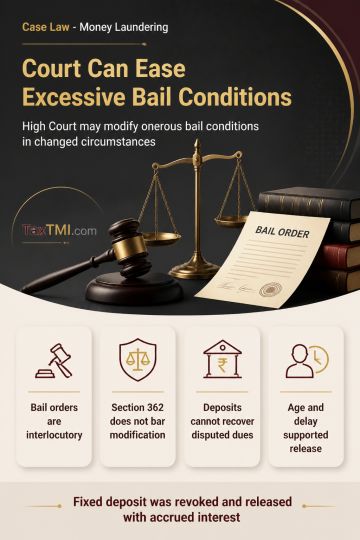
Modification of bail conditions remains available through inherent jurisdiction where onerous deposits undermine justice and cannot recover disputed d...
The ITAT affirmed the appellate authority's decision, holding that the taxpayer's receipts from international carriage of passengers and cargo, including services performed entirely by third-party carriers pursuant to code-sharing arrangements, constitute "operation of aircraft in international traffic" within the meaning of Article 8 of the India-US DTAA and are exempt from Indian taxation. The Tribunal applied the coordinate-bench precedent for the relevant assessment year, finding no material change in facts or law and no persuasive revenue evidence to the contrary. Because the entire receipts were held exempt under Article 8, subsidiary contentions regarding Article 8(2)(a) and Article 8(4) were declared academic.
The ITAT affirmed the appellate authority's decision, holding that the taxpayer's receipts from international carriage of passengers and cargo, including services performed entirely by third-party carriers pursuant to code-sharing arrangements, constitute "operation of aircraft in international traffic" within the meaning of Article 8 of the India-US DTAA and are exempt from Indian taxation. The Tribunal applied the coordinate-bench precedent for the relevant assessment year, finding no material change in facts or law and no persuasive revenue evidence to the contrary. Because the entire receipts were held exempt under Article 8, subsidiary contentions regarding Article 8(2)(a) and Article 8(4) were declared academic.
Note: It is a system-generated summary and is for quick reference only.
 TaxTMI
 of 4801















 Join Channel


 TaxTMI
