Commercial vehicle depreciation, scientifically determined warranty provisions and exempt-income disallowances were resolved in favour of the taxpayer...
Inherited property sale proceeds require capital-gains treatment where ownership is supported by evidence, not suspicion or unverified signature doubt...
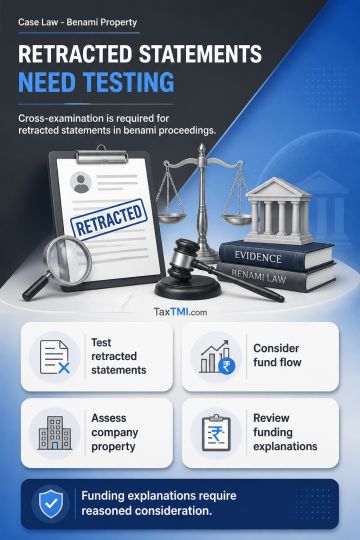
Cross-examination of retracted statements is essential where foundational evidence supports a benami allegation and documented funding explanations re...
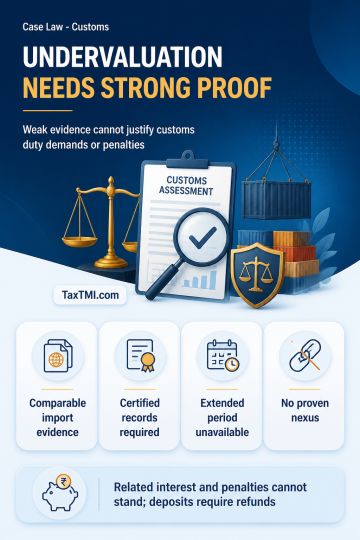
Capital-goods exemption covers plant-modernisation accessories, while the import restriction applies only to earlier capital-goods components and spar...
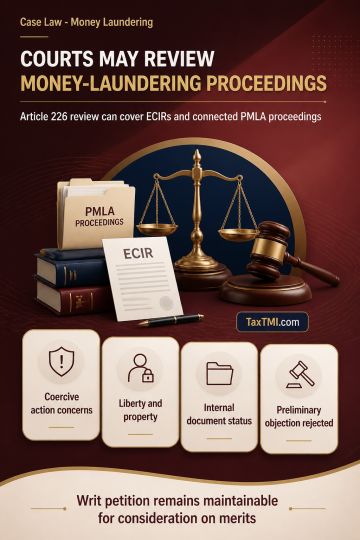
Constitutional judicial review permits challenges to ECIRs and connected money-laundering proceedings where coercive action affects fundamental intere...
The ITAT affirmed the appellate authority's decision, holding that the taxpayer's receipts from international carriage of passengers and cargo, including services performed entirely by third-party carriers pursuant to code-sharing arrangements, constitute "operation of aircraft in international traffic" within the meaning of Article 8 of the India-US DTAA and are exempt from Indian taxation. The Tribunal applied the coordinate-bench precedent for the relevant assessment year, finding no material change in facts or law and no persuasive revenue evidence to the contrary. Because the entire receipts were held exempt under Article 8, subsidiary contentions regarding Article 8(2)(a) and Article 8(4) were declared academic.
The ITAT affirmed the appellate authority's decision, holding that the taxpayer's receipts from international carriage of passengers and cargo, including services performed entirely by third-party carriers pursuant to code-sharing arrangements, constitute "operation of aircraft in international traffic" within the meaning of Article 8 of the India-US DTAA and are exempt from Indian taxation. The Tribunal applied the coordinate-bench precedent for the relevant assessment year, finding no material change in facts or law and no persuasive revenue evidence to the contrary. Because the entire receipts were held exempt under Article 8, subsidiary contentions regarding Article 8(2)(a) and Article 8(4) were declared academic.
Note: It is a system-generated summary and is for quick reference only.
 TaxTMI
 of 4798














 Join Channel


 TaxTMI
