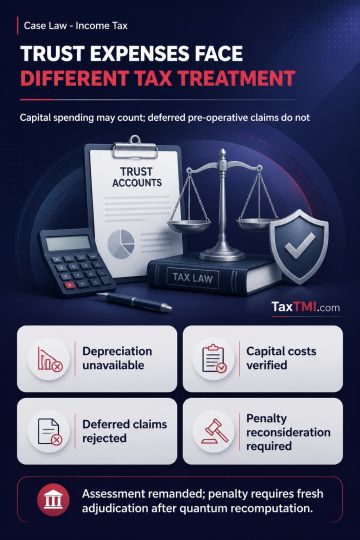
Charitable trust income application permits verified capital expenditure but rejects deferred pre-operative claims and requires reconsideration of con...
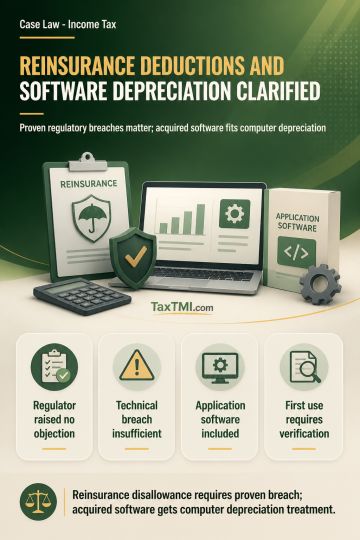
Reinsurance premium deductions require established regulatory breaches, while independently acquired software qualifies within the computer depreciati...
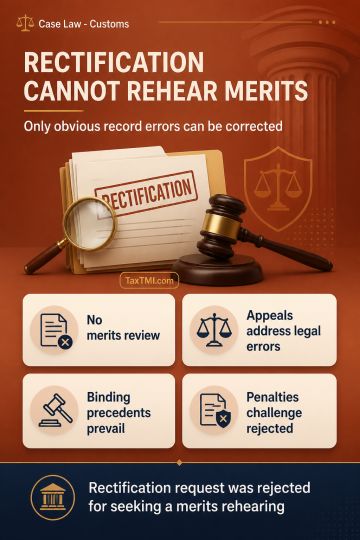
Rectification of mistake remains limited to self-evident record errors, preventing merits review through miscellaneous applications and preserving fin...
Tender creditworthiness conditions may extend to de facto Promoter Directors, with post-participation challenges generally barred absent arbitrariness...
Corporate representation in PMLA summons proceedings permitted through an authorised signatory, subject to directors' continuing cooperation and atten...
Page of 4801
Press 'Enter' after typing page number.
861 to 880 of 96001 Results
❮
❯
❯❯
0 / 200
Expand Note
Add to Folder
No Folders have been created
+
Are you sure you want to delete "My most important" ?
The HC entertained a writ under Article 226, holding territorial jurisdiction proper and the challenge not premature in light of recent statutory amendments permitting appeals against determinations. The petition was heard despite the statutory appellate forum because CESTAT was non-functional, rendering the alternative remedy illusory. On merits the HC found procedural irregularity and breach of natural justice: the designated authority accepted confidentiality claims without requiring non-confidential summaries or adequate reasons, thereby denying opportunity to contest reliance on confidential material in violation of Rule 7(2). The HC quashed the final findings and the duty levy and remanded the matter to the designated authority for fresh consideration from the petitioner's response stage; any duties collected remain subject to the ultimate outcome.
The HC entertained a writ under Article 226, holding territorial jurisdiction proper and the challenge not premature in light of recent statutory amendments permitting appeals against determinations. The petition was heard despite the statutory appellate forum because CESTAT was non-functional, rendering the alternative remedy illusory. On merits the HC found procedural irregularity and breach of natural justice: the designated authority accepted confidentiality claims without requiring non-confidential summaries or adequate reasons, thereby denying opportunity to contest reliance on confidential material in violation of Rule 7(2). The HC quashed the final findings and the duty levy and remanded the matter to the designated authority for fresh consideration from the petitioner's response stage; any duties collected remain subject to the ultimate outcome.
Note: It is a system-generated summary and is for quick reference only.
 TaxTMI
 of 4801















 Join Channel


 TaxTMI
