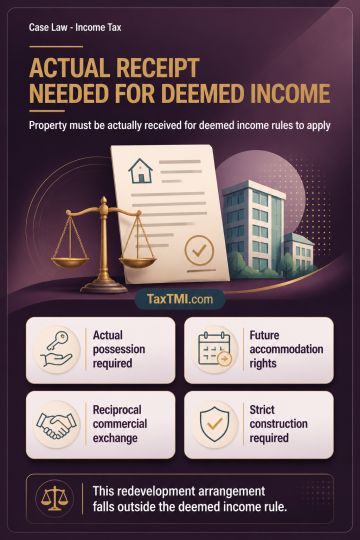
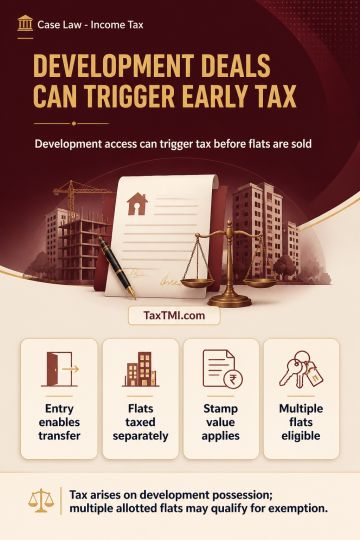
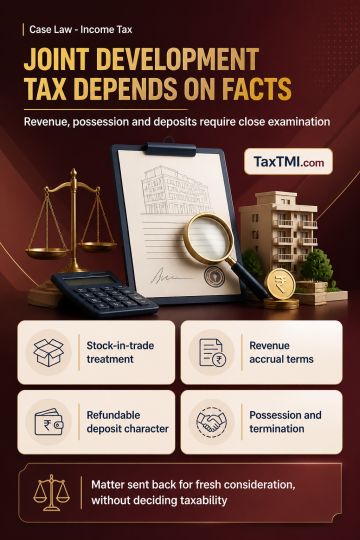
Receipt of immovable property requires actual possession or enjoyment; redevelopment allotments exchanged for tenancy rights fall outside deemed incom...
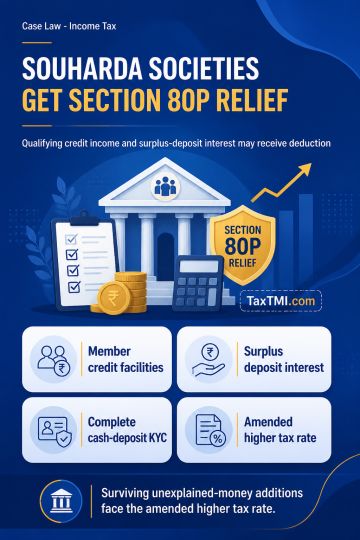
Section 80P deduction covers Souharda credit societies, including qualifying surplus-deposit interest, subject to member KYC verification for cash dep...
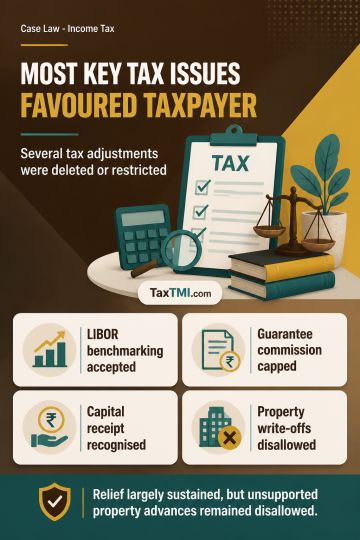
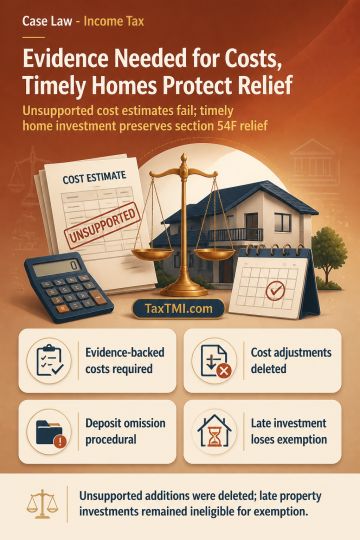
Transfer-pricing benchmarking and capital-receipt principles sustained taxpayer relief, while unsupported property-advance write-offs remained disallo...
Page of 4801
Press 'Enter' after typing page number.
941 to 960 of 96001 Results
❮
❯
❯❯
0 / 200
Expand Note
Add to Folder
No Folders have been created
+
Are you sure you want to delete "My most important" ?
CESTAT held that the demand for service tax on amounts received up to 30.06.2012 from the State-affiliated urban improvement trust cannot be sustained because the trust did not fall within the statutory definition of "person" operative before 01.07.2012; accordingly that portion of the demand was set aside. For the period July 2012-March 2015 the Tribunal upheld the demand, finding the trust's sale of EWS/LIG flats to be a commercial supply not covered by the notified exemption and that the appellant was not entitled to reliance on Notification No.25/2012; however, taxable events were to be quantified by dates of payment under the continuous-supply principle. Extended-period invocation was rejected and penalties were set aside; the impugned order was modified and the appeal allowed.
CESTAT held that the demand for service tax on amounts received up to 30.06.2012 from the State-affiliated urban improvement trust cannot be sustained because the trust did not fall within the statutory definition of "person" operative before 01.07.2012; accordingly that portion of the demand was set aside. For the period July 2012-March 2015 the Tribunal upheld the demand, finding the trust's sale of EWS/LIG flats to be a commercial supply not covered by the notified exemption and that the appellant was not entitled to reliance on Notification No.25/2012; however, taxable events were to be quantified by dates of payment under the continuous-supply principle. Extended-period invocation was rejected and penalties were set aside; the impugned order was modified and the appeal allowed.
Note: It is a system-generated summary and is for quick reference only.
 TaxTMI
 of 4801




 Join Channel


 TaxTMI